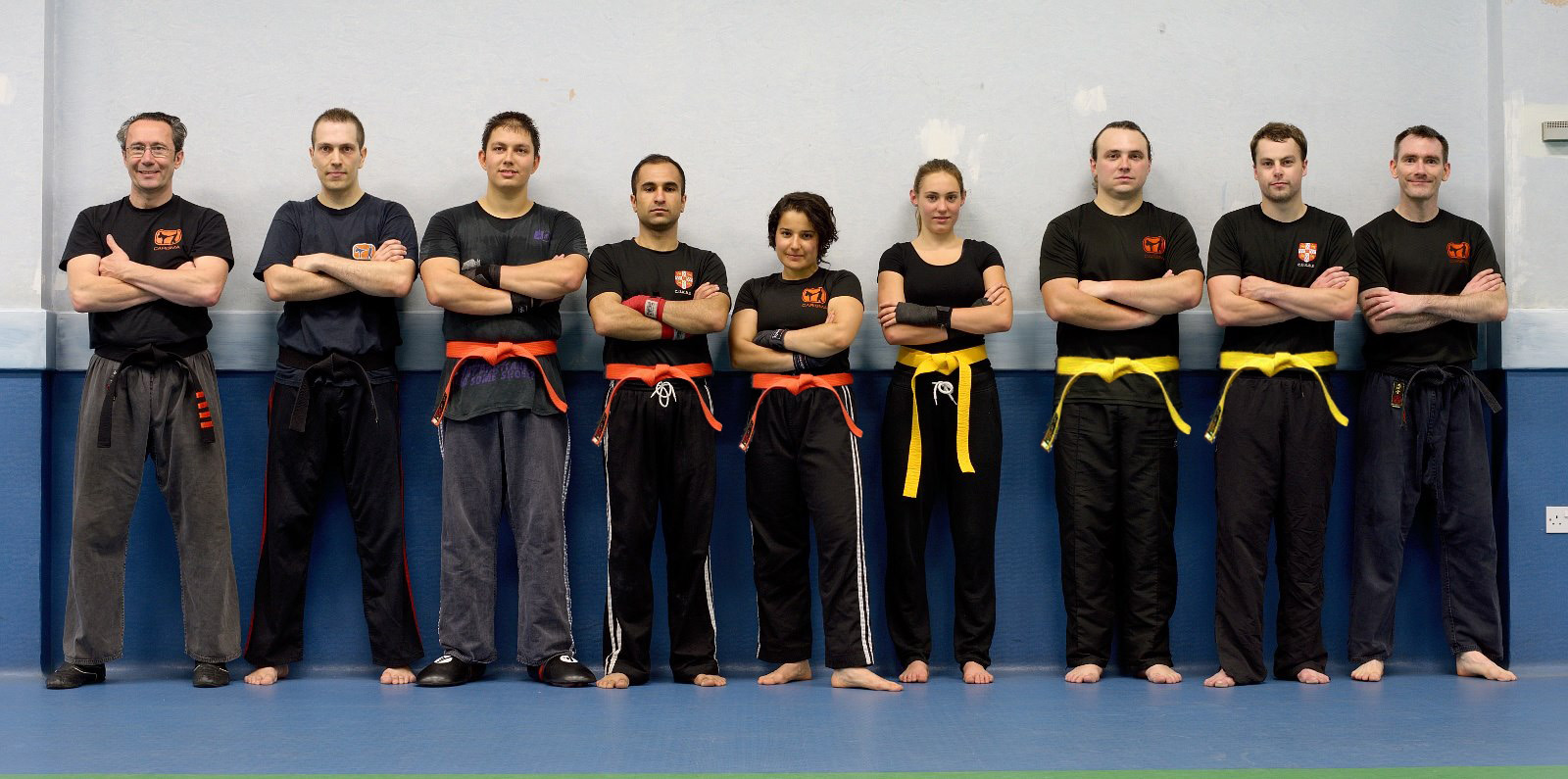
 Another succesful grading session on Sunday 8 September. One Orange Second, 2 Orange and 3 Yellow belts awarded to members of CARISMA and CUKBS.
Grading September 2013
Reply


Another succesful grading session on Sunday 8 September. One Orange Second, 2 Orange and 3 Yellow belts awarded to members of CARISMA and CUKBS.
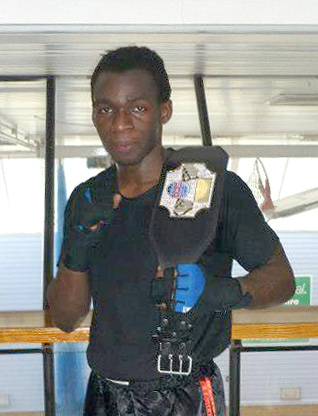 Olaoluwakitan ‘Ollie’ Osunkunle (pictured here with his belt representing the national title he won in May 2013) is a CARISMA member who is leaving us this month after training very hard and regularly for 6 years. Ollie joined us when he first started studying at the University of Cambridge for his medical degree which he achieved last month. In 6 years with us he won several fights against various university teams as well in open regional and national competitions and he was awarded a 1st Dan black belt just a couple of weeks before his medical degree. In his latest fight, weeks before his final exams, he won a national title.
One thing I often pointed out as a remark to his dedication was the consistency of his training regardless of the time of the year; he was one of the few university students that kept training during exam terms so I asked him to write a short article where he describes in his own words the experience of studying hard for a very demanding degree and, at the same time, train hard to be ready to fight at national level. Here is his article:
7 am. I fling myself bolt upright in bed. Letting out a great yawn, I do some simple stretches as I try to clear my mind for the day ahead. One day left. This is it. After six years of medical school; dissecting dead bodies; chemistry practicals and endless exams. This is it. My final exam before I hopefully earn the right to call myself doctor.
I sit at my desk and read through my list of tasks for the day ahead, there is only one decision left to make. “6.30pm → Kickboxing – sparring training”, can I make it? Of course, now let me explain why.
I studied medicine in Cambridge University. During my exam periods I kept my exercise routine as near to normal as possible. During the couple of months prior to my exams, I took part in the Oxford vs. Cambridge varsity match, won a national kickboxing competition and achieved my black belt in kickboxing. These achievements are by no means out of the ordinary and I know many other students that have kept up far more extensive sports participation.
I believe that there are a few key reasons why people give up on their exercise routines in the run-up to a major exam. Firstly, the threat of the impending exam causes the body to enter into a state of stress. In this state, people stop working to achieve their goals and instead struggle desperately to relieve themselves of their stress. Spending hours sat in front of study books is one such technique to relieve stress. However, those hours spent are often in excess of what is productive. A change is as good as a rest.
Secondly, with a prepared study plan and objectives to achieve before the exam, one might believe that there is simply not enough time to study and exercise in the same day. The disease of “time excusitis”. However, for most people, this is simply not the case. Working more efficiently: smarter rather than harder allows ample time for exercise in one’s day. Application of key principles such as Pareto’s law, commonly known as the 80/20 rule allows one to reduce the amount of material to learn. After all, 80% of the key information to learn will be covered in 20% of the available materials. Combined with Parkinson’s law, known as the law of forced efficiency, reducing the amount of time you have available to study forces you to focus on only the most relevant and high-yield data. Taking time out to kickbox helps you study smarter.
Thirdly, there is the worry of the biological effects that kickboxing may have on your body. After all, you may worry: “won’t I be too tired to study if I spend all my energy exercising?” Fortunately, the reverse is usually true. Exercise acts as a great stress reliever. Whilst a small amount of stress improves performance, large amounts have been shown to be detrimental to performance (1). In addition, exercise has been shown to improve memory, a great benefit prior to exams! (2)
So the next time you’re contemplating spending an extra hour in front of the books or heading to class, pick up your gloves and remember that there’s really only one correct choice to make. Punch away.
1. L P. Emotionality and the Yerkes-Dodson Law. J Exp Psychol. 1957;54(5):345–52.
2. Stroth S, Hille K, Spitzer M, Reinhardt R. Aerobic endurance exercise benefits memory and affect in young adults. Neuropsychol Rehabil. 2009;19(2):223–43.
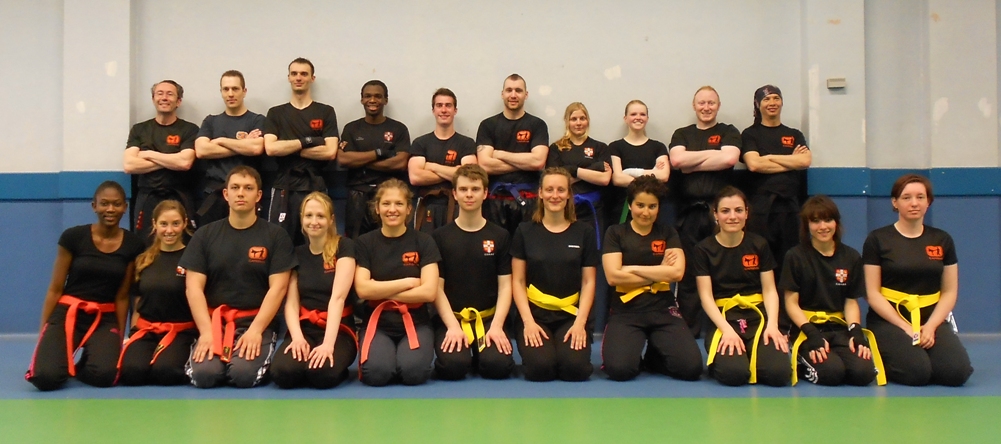 Another successful grading session on Sunday 2 June. Two Black, 1 Brown, 2 Blue, 1 Green Second, 3 Orange Second, 2 Orange and 6 Yellow belts awarded to members of CARISMA, ARUKBC and CUKBS.
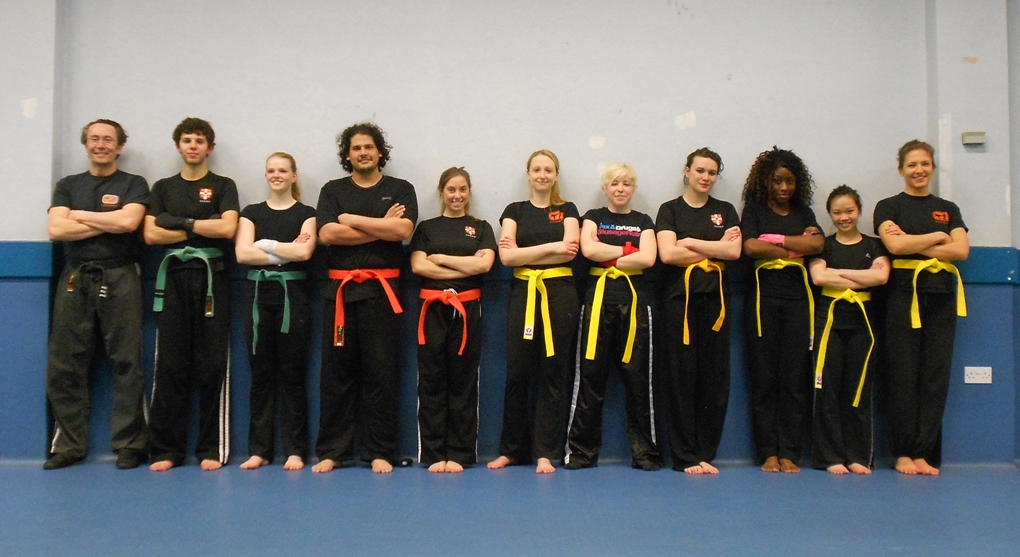 Another succesful grading session on Sunday 10 March. One Green Second, One Green, 3 Orange and 6 Yellow belts awarded to members of CARISMA, ARUKBC and CUKBS.
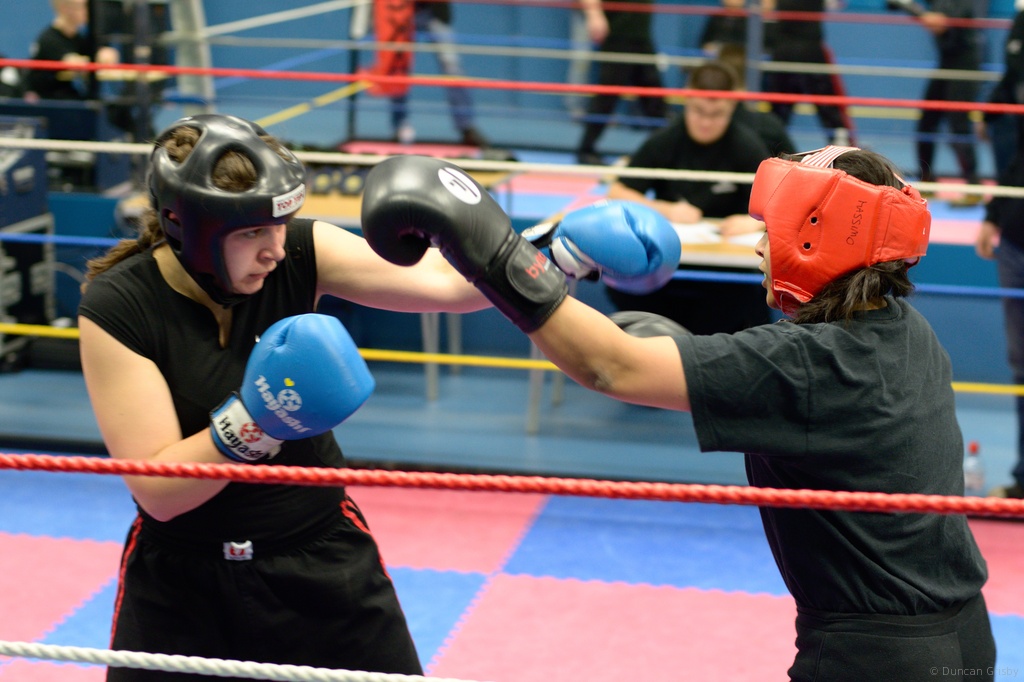
Image courtesy and copyright of Duncan Grisby 2013
A kickboxing bout can be regulated by different rules and levels of contact; what seems to be growing fast and well applying to amateur athletes is the so called Light Contact or Light Continuous. In my experience the term light probably had a different meaning when this style was first defined 20 years or so ago. Light contact was originally created as a softer version of a continuous full contact bout but, in 2013, light contact kickboxing is not as light as its name suggests.
To the contrary to what inexperienced people might assume winning a light contact fight is not about knocking somebody down but applying a strategy that aims at scoring more points than your opponent. In fact a KO victory is just possible by accident and anybody trying to finish a fight early by KO, as it could be applied when fighting in other styles, will be subject to disciplinary actions.
In light contact the winning strategy is about keeping a nice level of pressure with attacks that actually score and a guard/defence that avoids much scoring from your opponent. Judges will score all attacks landing in scoring areas but also take into account who is actually attacking most and who is dominating the fight. It is always preferable for you to set the pace and the style of the bout you are fighting but, if your opponent starts very aggressively since the beginning and tries to impose his/her strategy, you might need to quickly control his/her enthusiasm.
As we are talking about kickboxing fight we should remember that a good looking fight should have attacks that combine and alternate both punches and kicks.
Here a few strategies that could help you winning:
If you have lots of stamina you could simply keep attacking and putting positive pressure on the opponent; if you are facing a less fit opponent he/she will soon close into a defensive guard and you’ll have an easy victory. If your opponent is as fit as you or more you might need to adapt your strategy to one of the next ones.
It a simple strategy based on keeping the distance and launching attacks based on combinations of kicks and punches; you blitz into reaching distance, hit a few times possibly scoring once or twice and get back out of range. If you manage to impose your own attacks and force the opponent to accept your strategy you will look as the dominating fighter in the ring and, as long as you land a few scores per round while keeping a decent guard, you will win. This second strategy works well if your fitness is good but not enough to implement and maintain the machine gun attack
This strategy requires excellent timing skills so that you can intercept or anticipate your opponent’s attacks and score while he/she is attacking you. You should have enough speed to catch them unprepared and enough power to disrupt their strategy when they are trying to implement a machine gun or blitzing attack. This strategy could be the one requiring the least amount of stamina but you should never underestimate how fit and powerful your opponent might be and where he/she will be pushing the fight.
I cannot think of a fight where just one of this strategies could be applied on its own; also you can make all plans of this world but if they do not fit with your opponent you must be prepared to have a plan B.
