

How we prepare athletes for full contact fights

Let’s be real: stepping into a ring for three rounds of two minutes sounds like a short commitment until someone is actively trying to take your head off. Full contact fighting isn’t just a sport; it’s a high-stakes puzzle solved under extreme physical and mental duress. We don’t start from zero. We assume our athletes are already “keen” kickboxers with a solid foundation. Our job is to take that raw skill and forge it into a weapon that can withstand the extreme pressure of a real fight. Here is how we bridge the gap between “decent” and “proficiently safe”.

The first step, a few words of caution

My conversation with any aspiring full contact fighter is to ensure they understand these basic concepts:

  • This is not going to be a walk in the park or even a marathon run where there is one winner and many participants. It will be you and your opponent in the ring and one of the two will be a winner
  • You are entering a sports competition where your opponent is trained and authorised to hurt you, within the regulations which are enforced by a referee
  • Our aim is to train you to win but, if you don’t make it, you will lose in a way that it will minimise your damages

Refining the arsenal: efficiency over flash

In a full-contact environment, every movement must have a purpose. We strip away the “fluff” and focus on the mechanics of single techniques. If a jab isn’t snapping or a round kick isn’t turning the hip over correctly, it’s wasted energy.

  • Maximum damage: we tweak body mechanics to ensure every strike carries the weight of the entire body, not just the limb
  • The “iron shield” guard: offense is great, but if your chin is in the air, the fight ends early. We drill “active defence,” ensuring that even while attacking, the opposite hand is glued to the jaw and the shoulders are tucked

The science of the combination

Throwing a single punch is easy. Throwing a four-strike combination that leaves you protected and ready to counter is an art form. We train our fighters to deliver sequences that flow naturally and exploit the opponent’s defensive reactions. We consider these different aspects of the action:

  • Flow: Eliminating the “reset” pause between a punch and a kick during a combination to improve speed of any combination
  • Angle cutting: moving off the centreline during the combination and keeping a tight guard at all times to avoid counter attacks
  • Damage density: ensuring that every punch or kick in a combination delivers damage the final (exit) strike is the most powerful

Power, meet volume

It’s one thing to hit a heavy bag hard once. It’s another to maintain that “knockout power” in the final thirty seconds of the third round when your lungs are screaming.

We push our athletes through high intensity interval drills that mimic the rhythm of a fight: explosive bursts followed by active recovery. The goal is simple: be able to hit harder than ever before and keep doing it for as long as the referee allows.

The mental fortress: concentration under fire

The biggest challenge in full contact isn’t the pain—it’s the panic. When fatigue sets in, the first thing to go is the mind. You lose your “eyes,” you stop seeing the openings, and you forget your guard. We use pressure testing to build mental resilience. By the time our fighters step into the ring, they have already been in deep water during training. They’ve learned to keep their focus sharp and their breathing steady, even when the pressure is beyond what most people expect.

The payoff: why we do it

Training for full contact is, frankly, exhausting and occasionally painful. But it pays dividends that few other experiences can match.

  1. Minimized damage: proper preparation is the best insurance policy against injury
  2. Unshakeable assurance: knowing you have the “gas in the tank” and the skills to handle a hostile opponent provides a level of self-confidence that carries over into every aspect of life
  3. The satisfaction of the grind: there is a unique pride in knowing you didn’t take the easy road.
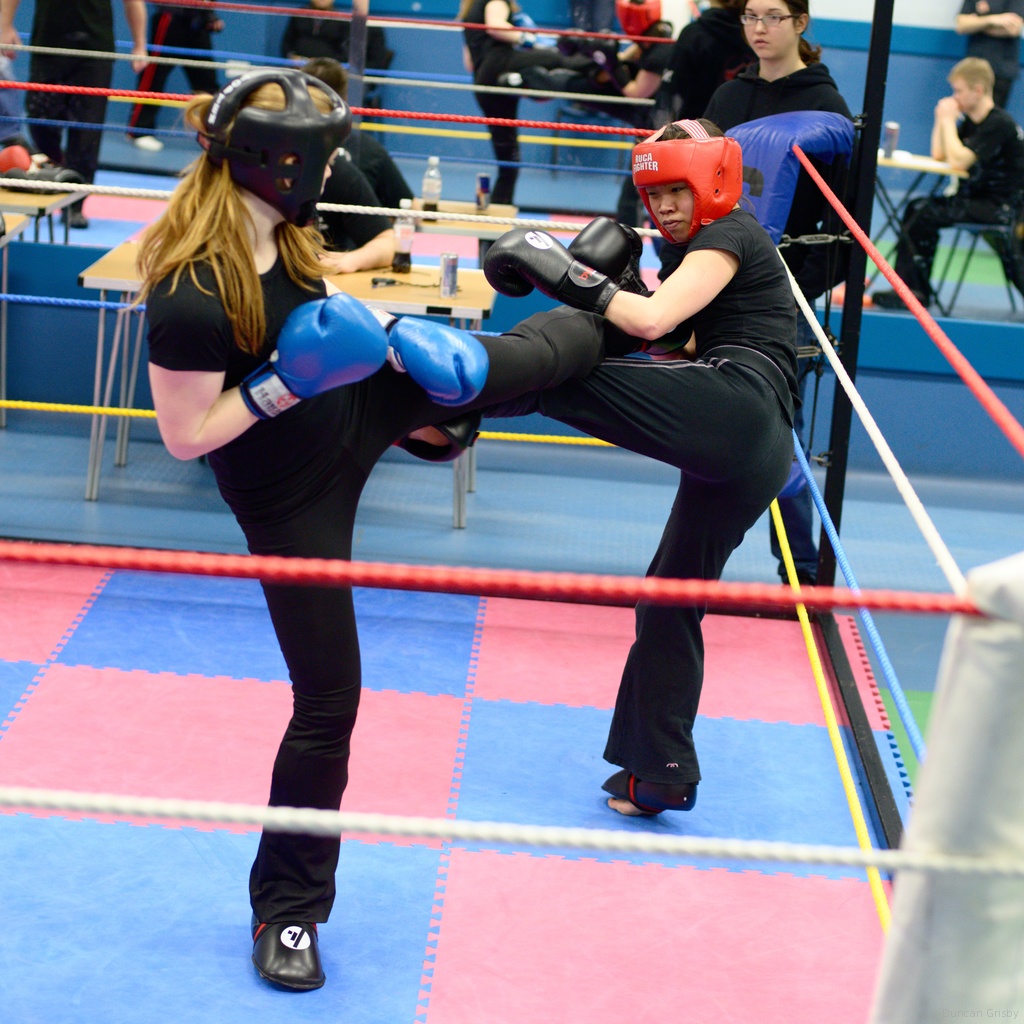
Reach your peak of performance: why American kickboxing is the ultimate modern martial art

In a world filled with countless fitness trends and combat styles, American kickboxing stands out as a “Goldilocks” discipline: it perfectly balances the refined technique of traditional martial arts with the raw intensity of modern fighting sports.  At CARISMA, we have seen firsthand how this sport serves as a powerful catalyst for personal growth, whether you are a child finding your feet or an adult looking to reclaim your edge. Here is why American kickboxing is a sport everyone should experience.

A Masterclass in Physical Versatility

Most sports specialize in one area—distance running for stamina, weightlifting for strength, or yoga for flexibility. American kickboxing demands all of them.

  • Agility & Reflexes: The fast-paced nature of the sport sharpens your “fight-or-flight” response, turning it into calculated “read-and-react” precision.
  • Total Body Strength: From the rotational power of a cross punch to the explosive drive of a roundhouse kick, every muscle group is engaged.
  • Dynamic Flexibility: High kicks aren’t just about looking spectacular; they require and develop incredible range of motion in the hips and core, which protects the body against injury in everyday life.

Building “The Resilience Muscle”

Life is unpredictable, and American Kickboxing is the perfect training ground for handling pressure. In the gym, you learn to keep your guard up when you’re tired and stay focused when things get difficult. This translates directly into mental resilience. For adults, it is the ultimate stress-reliever—a place where the frustrations of the workday are channelled into the punching bag or a fully padded training partner who can help you with training. You don’t just leave the gym fitter; you leave it calmer and more capable of handling life’s challenges.

From Children to Confident Adults

For younger practitioners, we accept children from 12 years of age, the benefits go far beyond the physical. The American kickboxing we teach at CARISMA provides a structured, disciplined environment where children learn the value of discipline, respect and hard work while having fun.

  • Self-Confidence: There is a unique kind of confidence that comes from knowing you can defend yourself. This isn’t about aggression; it’s about the quiet “inner warrior” that allows a child to stand tall against bullying and peer pressure.
  • Development: It turns “fidgety” energy into focused coordination, teaching children how to set goals and work toward them through grading and technique mastery.

The Spectacular “Art” in Martial Arts

There is no denying it: American kickboxing is spectacular to watch and even more exhilarating to practice. The “blitzing” movements, the combination of Western boxing hands and Eastern martial arts kicks, and the fluid movement across the mats make it one of the most dynamic sports in existence. It is never boring. Every session is a new puzzle to solve, a new combination to master, and a new level of fitness to unlock. While many clubs limit their practice to a few combinations which use 2-3 punches and a couple of kicks at CARISMA we practice the full spectrum of punches and kicks plus combinations which include multiple kicks with one leg.

A Safe, Inclusive Community

At CARISMA, we believe that while the sport is rooted in combat, the environment should be supportive. We specialize in making the art accessible to everyone—from college and university students and busy professionals to local residents of every gender. Our focus on controlled training ensures that you can push your limits and build amazing skills without the high risk of injury found in less-structured environments. We encourage everyone to push themselves beyond their comfort zone, without risking to be overwhelmed or putting their safety at risk. Anyone interested in competing and prepared to put the hours in will be given access to opportunities of fighting in both light and full contact bouts.

Why Starting Now?

Whether you are looking for a way to get into the best shape of your life, seeking a discipline that builds character in your children, or simply wanting to learn a practical and effective self-defence system in Cambridge, American kickboxing is the answer. It is a sport that gives back exactly what you put in: strength, agility, and a level of self-confidence that will stay with you long after you’ve stepped off the mats.

CARISMA Town vs. Gown 2023 – The Fights

We are pleased to finally announce the matches for our annual Town vs Gown fight. Matches were made taking into account weight and experience. The fights will happen in the order as listed below; last minute changes could occur, caused by unforeseen circumstances:

Harry Chacksfield CUKBS vs. Mikail Sheikh CARISMA
Nicholas Omerovic Smith ARUKBC vs. Orazio Solano CARISMA
Brendan Harber ARUKBC vs. Mikail Sheikh CARISMA
Calum Mccartney CUKBS vs. Will Griffin CARISMA
Madden Savage Hall CUKBS vs. Yifei Liu ARUKBC
Saul Jenkins CUKBS vs. Will Griffin CARISMA
Carmen Raichs CUKBS vs. Lily B.Thomas CUKBS
Adam Choudhury CUKBS vs. Raul Iacob ARUKBC
Ana Stojanovic CUKBS vs. Erin Kingston CARISMA
Fabian Brennan CUKBS vs. Christopher Jackson CARISMA
Aoibh Bourke CUKBS vs. Nur Calis CUKBS
Norpell Wilberforce CUKBS vs. Xianzhen Lin CUKBS

CARISMA Town vs. Gown 2023 – Rules and Equipment

Will all fighters please read carefully this post and ensure to understand it in its entirety. Any question please comment the post so the answer can be seen by everyone.  All fighters will have to be on site not later than 1:30PM for weigh in and briefing. Spectators will be allowed in from 2pm.

Matches

All fights are pre-matched by gender, weight and experience, with the best intentions to pair athletes from different clubs in each match.  All fighters will be weighted in before the event start and if the fighter’s weight is substantially higher than their expected weight it might be disqualified or given the decision to their pre-matched opponent to forfeit the fight.

Fights

All fights will have 3 rounds with 60 seconds breaks; matches where at least one of the fighters has less than 6 months experience will have 1 mins rounds.  Fighters with up to 12 months experience will fight 1.5 minutes rounds. The others will fight 2 mins rounds.

Scoring

Punch to Head 1 point
Punch to Body 1 point
Front Foot Sweep 1 point
Kick to Body 2 points
Kick to Head 3 points
Jump Kick to Body 3 points
Jump Kick to Head 5 points

Clubs Scoring

Each club will receive 3 points for each won fight and 1 point for each lost fight; at the end of the tournament the club with higher score will be nominated the winner.

Scoring Areas

  • Side of Head
  • Face
  • Under Chin
  • Front Torso
  • Side Torso

Illegal Areas

  • Back of Head
  • Top of Head
  • Neck
  • Arm
  • Hand
  • Back
  • Kidney Area
  • Below the Belt (other than below the ankle sweeps)

Sweeps

All Sweeps must be boot to boot and no higher than the ankle. For a sweep to score, the sweep must incur either a complete grounding, or a stumble leading to the fighter touching the ground with any part of the body other than the soles of the feet. Even the slightest of touches to the ground by the fingers for example, will result in the sweep being deemed successful.

Legal Techniques

  • Jab (landing with knuckle part of the glove)
  • Reverse Punch (Back Fist, landing with knuckle part of the glove)
  • Hook Punch (to the body and head)
  • Uppercut Punch (to the body and head with control)
  • Front Kick (to the body and head)
  • Side Kick (to the body and head)
  • Hook Kick (to body and head) including Spinning Back Hook Kick
  • Jump Spinning Hook Kick (to the body and head)
  • Spinning Back Side Kick (to the body and head)
  • Jumping Spinning Back Side Kick (to the body and head)
  • Roundhouse Kick (to the body and head) including Jump Round Kick
  • Inside & Outside Crescent Kick (to the body & head) including Jump
  • Internal & External Axe Kick (to the body & head) including Jump Axe
  • Front Sweep (performed with inside of foot to below ankle), both legs front sweep can be to the inside and outside of the opponent’s boot

Illegal Techniques

  • Any open handed strike with the inside of the hand (slap)
  • Ridge Hand
  • Drop Sweep
  • Reverse Drop Sweep
  • Palm Heel Strike
  • Strikes with the elbows
  • Any Throw
  • Any take down
  • Pushing with arms
  • Leg Kicks
  • Strikes with the knee
  • Strikes with the Head
  • Use of the thighs
  • Touching the ground with any other part of the body than the soles of the feet.
  • Any Blind Technique

Illegal Actions

  • Swearing
  • Verbal attacks to the Opponent or Officials
  • Accusations of cheating to any Official or Competitor
  • Uncontrolled Strikes and Kicks
  • Any strike or kick to a joint
  • Strike to top or back of head or to the back of the body
  • Strike or Kick to the groin
  • Scratching, biting or spitting
  • Punching or Kicking after the Referee calls stop
  • Leaving the fighting area
  • Falling down
  • Running around the area
  • Using faulty or ill-fitting safety equipment
  • Wasting time in an unsporting fashion
  • Talking
  • Causing offence by inappropriate apparel, gestures or words
  • Excess power
  • Refusing to touch gloves or any other unsporting behaviour

All of the above offences may be punishable by the Referee. The Referee may decide to verbally warn, officially warn, deduct a point or disqualify the competitor depending upon the severity of the offence.

Fighter’s Equipment

  • Headguard Must cover the top of the head. Must be a Martial Arts type Headguard in good condition which fits well. A full-face or semi-face visor may be worn if it can be proven that a medical condition requires it. This must be authorised by the organiser prior to the start of the Tournament.
  • Gumshield Martial Arts or Boxing type. No football / rugby type.
  • Boxing Gloves Must be 10 ounces for everyone.
  • Kick Boots Must cover the Instep and heel. Must be full boots and not shin-guards with instep pads. Must cover the whole foot.
  • Groin Guard. Must be worn under clothing, and not on top.
  • Shin Guards Must be worn under clothing and not on top. Must not be worn higher than the knee
  • Chest Guard Must be worn under clothing and not on top. Essential for female Juniors and Adults.

Clothing

Fighters must be clean and dressed in an appropriate outfit. Toe nails should be clean and cut short. Fighters should wear a clean club’s T-Shirt that ensures that the top half of the arm is covered by a sleeve.

Martial Arts style trousers must be worn. The trousers should cover the Velcro fastening on the boots and should be full length. There should be no zips, pockets or buttons on the trousers at all. Track suit style trousers are not allowed. Hand bandages are allowed, maximum length 2.5 meters. Tape on the fist or the knuckles is allowed, but must not be excessive. The Referee can deem any hand-wrapping to be excessive.

Long hair should be tied back. No Metal/Plastic objects to be worn by any competitor, including earrings, eyeglasses, rings, watches, hair grips, chains, piercing jewellery etc. Soft contact lenses are allowed at the Fighter’s risk.

The Coach must wear appropriate clean sports clothing, and sporting shoes.

Equipment Check

Each Fighter is subject to an equipment check prior to the start of the fight. The checks are to be done by the Center Referee. Groin guards and chest guards are not to be touched by the Referee. The Fighter should be asked if they have the relevant equipment on, and they should reply in the affirmative. If injury occurs, and the Fighter has lied about the presence of such safety equipment, the Center Referee must disqualify the Fighter for breaching the safety rules. This is a compulsory disqualification regardless of how the accident happened.

What the Referee can do

The Referee is the only person who can stop the bout. The Medic must signal to the Referee if he/she wants the fight stopped. The Coach can retire the Fighter.  The Referee may change any or all of the officials in his area if he wishes. This must not happen during a fight unless an Official is ill. A Referee can deduct a point, or disqualify a Fighter, for any unsporting behaviour or dissent.

A Referee can disqualify a Fighter if he/she fails to be ready to fight after being called. (This includes not having the correct safety equipment, the right outfit or not turning up at all). One minute should be called, and the Timekeeper should indicate when the minute has expires. The winner will be the Fighter who is ready to fight, and the win shall be recorded as a Walk Over.