

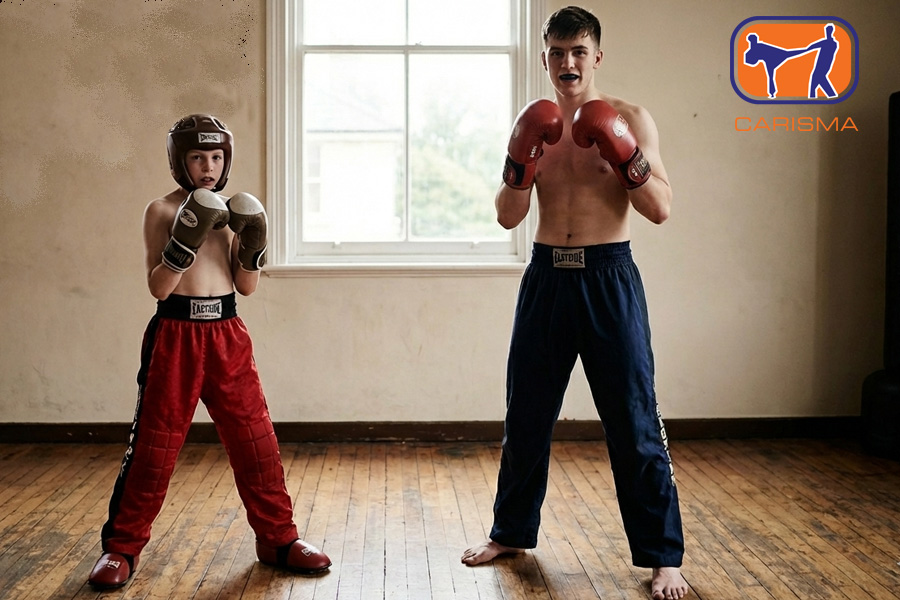
 A few weeks ago, I received a call that reminded me exactly why we do what we do at CARISMA. It was from a father in Cambridge whose 10-year-old son had recently been bullied and, unfortunately, physically assaulted, however slightly. The father, having practiced martial arts in his own youth, knew the transformative power of the dojo. After researching several clubs in the area, he reached out to me because of the philosophy he saw reflected on our website. He wasn’t just looking for someone to teach his son how to throw a punch or a kick; he was looking for a place where his son could rebuild his world and pave the way for self confidence.
The post-pandemic shift
While we haven’t historically been a “children’s club,” the last few years have seen a fascinating shift. Since the end of the COVID-19 pandemic, we have seen a flourishing of 12-to-15-year-olds—both boys and girls—joining our classes. Watching these young people evolve is one of the most rewarding aspects of coaching. In a world that felt very small and uncertain for a long time, these teens are finding their space. We see them grow:
- Physically: developing the coordination, strength, and “explosive power” of a true martial artist.
- Emotionally: moving from the hesitancy of early adolescence to a grounded, calm sense of self.
The pillar of confidence, discipline, and respect
At CARISMA, we don’t sugarcoat the training. We train hard, however within the limits and aspirations of each individual. But it is through that “hard” work that the most beautiful transformations happen. Young people today are often over-stimulated but under-challenged. When they step into our gym, they learn discipline and resilience—the ability to do what is required even when they are tired. They learn respect—for their partners, their instructors, and, most importantly, themselves. “Training hard helps these young people build a core of confidence that no bully can shake.”
The Paradox of Self-Defence
People often ask if we teach “self-defence.” My answer is often a bit different than what they expect. True self-defence isn’t just a set of techniques; it is a state of mind. It is mostly learnt by being so confident in your ability to fight that you no longer feel the need to prove anything to anyone. However, if you ever need to protect yourself bit hitting someone your strike will be powerful, efficient and hitting where it does the most damage. The best thing is that when a young person knows they can defend themselves, the “need” to demonstrate it vanishes. They carry themselves differently. Their shoulders are back, their eyes are up, and that internal security acts as a far more effective shield than any physical move ever could. They aren’t looking for a fight; they are simply no longer afraid of one.
Building the future
It is a privilege to watch these teenagers develop into powerful martial artists and, more importantly, resilient young adults. Whether it’s a 10-year-old regaining his footing or a 15-year-old finding her strength, we are here to provide the tools for that journey.