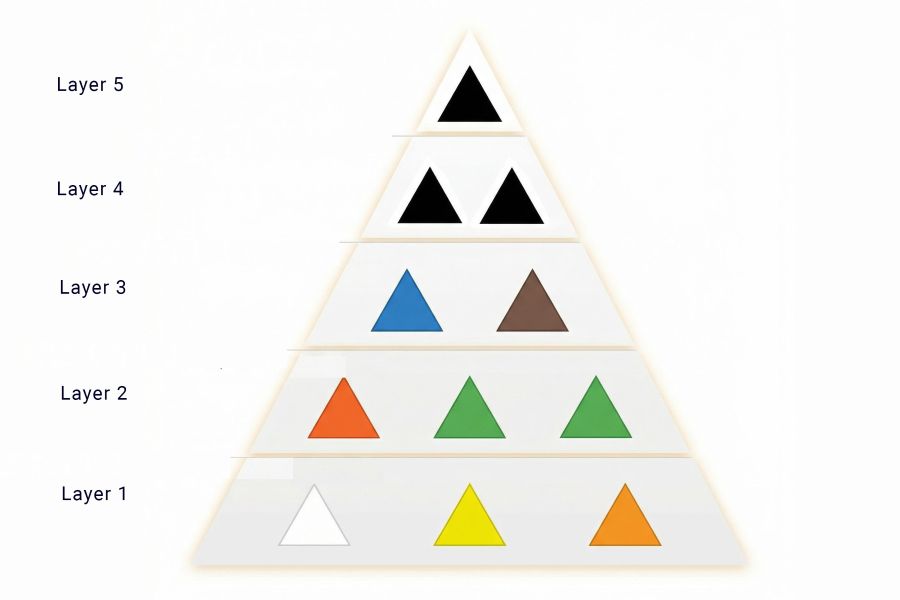
Our kind of members: the layered journey from white to black belt at CARISMA

At CARISMA, we don’t just teach kickboxing; we live it. Our passion, at least the one of the keen members and instructors, lies in the grit, the technique, and the personal evolution that comes from stepping into our training hall. We are an open door for anyone—regardless of where they start—who is ready to explore their potential and reap the physical and mental rewards of martial arts. However, we don’t just “collect” members. We nurture martial artists. We view our community through five distinct layers of progression, reflecting a member’s rank, commitment, and the sharpening of their character.

Layer 1: the foundation (White, Yellow, and Orange)

Every journey begins with the first step, in this case, with the courage to be a beginner. In this initial stage, we look for consistency:

  • Expectation: training 2–3 times out of our 4 weekly classes.
  • Focus: building the habit. This is where you learn the language of kickboxing and start conditioning your body for what’s to come.

As people are training consistently the instructors start noticing some people sticking out from the crowd; they attend regularly, they quickly become known faces. Some of them turn up early and trying to practice and apply techniques which are not working for them, until they do.

Layer 2: the transformation (Orange Second, Green and Green Second Belts)

For those who are committed enough to last for about 1 year of steady sweat, the “newbie” shell starts to crack. We expect to see a visible shift in their physical capabilities:

  • Physicality: fitness, strength, endurance and flexibility starts to be noticeably higher.
  • Technicality: punches are crisper, kicks are faster, guard is constantly protecting and movements are more intentional. Even on a gentle sparring they are no longer as easy to hit with basic punches and kicks.
  • Dedication: this is where we see an “increased dedication”—the realization that martial arts isn’t just a hobby, but a discipline and more of a weekly habit.

Here we notice a small number of members who become keener and keener; they get involved in sparring and try their first fight, usually light contact.

Layer 3: the ascent (Blue and Brown Belts)

This is the “extra mile” phase. By the time they reach Blue Belt, the Black Belt is no longer a distant dream—it’s a visible point on the horizon:

  • Blue Belt: we notice members pushing beyond the standard curriculum. Coordination becomes second nature, and sparring moves from “surviving” to “competing competently.”
  • Brown Belt: this is the penultimate step. At this stage, we want members who are hungry for the graduation. They aren’t just practicing; they are preparing to represent the club at the highest student level.

Some exceptional individuals, can be selected to become assistant instructors and offered to get involved in helping out.

Layer 4: the new beginning (Black Belt)

For many, the Black Belt is seen as the finish line. At CARISMA, we see it as the new starting point. “From White to Black Belt takes roughly four years of intense, dedicated training. But once that belt is tied, the real journey begins.” This is where the dedicated martial artist truly begins to shine. The technique is ingrained, the fitness is peak, and the mind is disciplined. You’ve graduated from learning the craft to mastering the art.

Layer 5: instructors and coaches

Many of the members who became black belt at CARISMA over the years had a position as instructors.  Some instructors achieved this position without yet wearing a black belt. At CARISMA we select very carefully who are those dedicated and technically sound members who have the knowledge and personality to run classes. We expect a very high level of dedication and consistency to training and fitness to ensure all instructors can show and do every technique we practice as well as being able to teach and coach any member around techniques, blocks, guard, footwork and sparring methodologies.

The CARISMA timeline

While everyone moves at their own pace, here is a general look at the commitment required:

Milestone Timeframe Primary Focus
White to Orange Months 1–12 Consistency & Core Basics
Green Belts Year 1–2 Fitness, Speed & Strength
Blue to Brown Year 2–4 Sparring, Coordination & Dedication
Black Belt 4+ Years Mastery & Advanced Practice

Whether you are here to get fit or to eventually wear the Black Belt, we are ready to help you push your limits. The question is: are you ready to find your layer?
Back to training

We are pleased to announce that we are re-starting our classes after the COVID-19 pandemic break.

The restrictions which are still in place will not allow us to exercise at our full potential and train with partners for the moment.  For this reason our first month(s) of post-COVID activities will have a restricted time table, matched by a reduced monthly fee. The lessons we can offer at the moment will be very similar to the ones in my videos which you can watch by following this link: contactless, COVID safe and still lot of fun.  We will be offering the following:

  • Opening from 1st September
  • 3 lessons per week, Tue and Thurs at 7, Sunday at 5 at Kelsey Kerridge
  • 1 hour lessons
  • 20 minutes warm-up followed by 40 minutes techniques and combinations in front of the mirror with shadow boxing
  • classes limited to 21 people max (at Kelsey Kerridge), including instructors
  • Monthly fees at 50% of your current fee charged by direct debit (or cash for the few who were paying cash)
  • We’ll continue these terms and schedule until further relaxation of COVID restrictions when we can hopefully go back to standard training regime and schedule

We are looking forward to seeing many of you back at training; please join us from 1st September at 7pm.

Enjoying the British weather so far

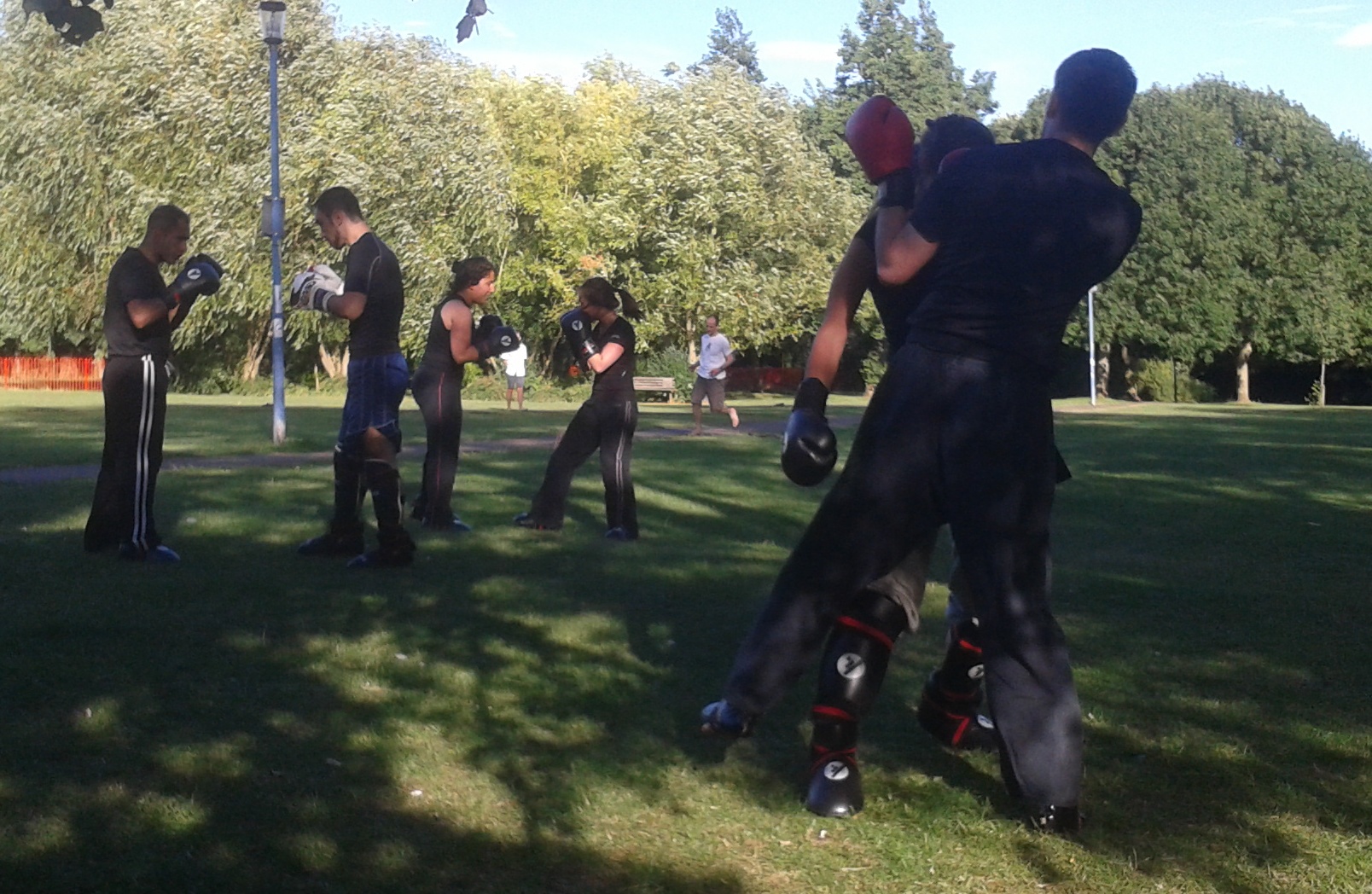
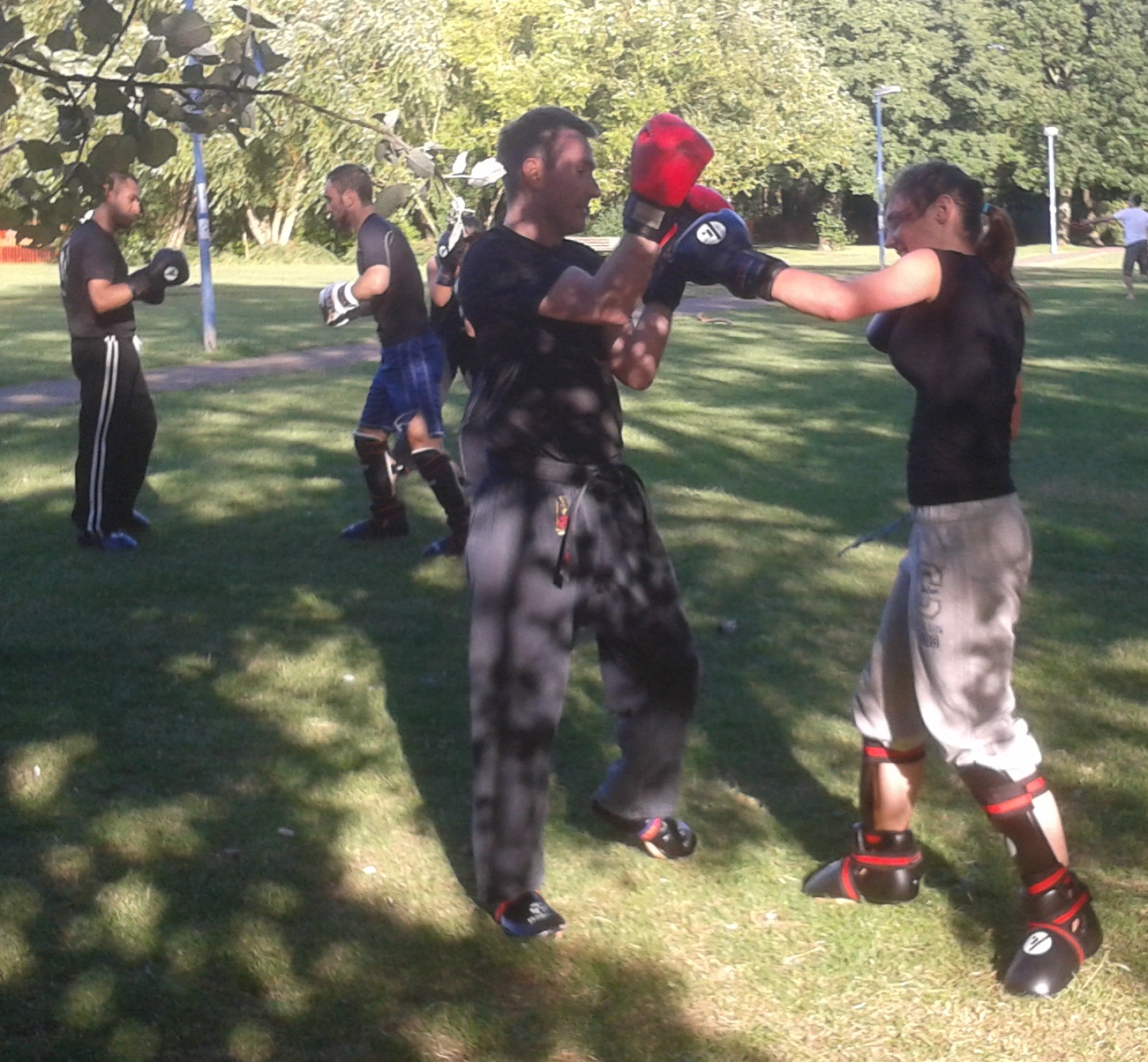
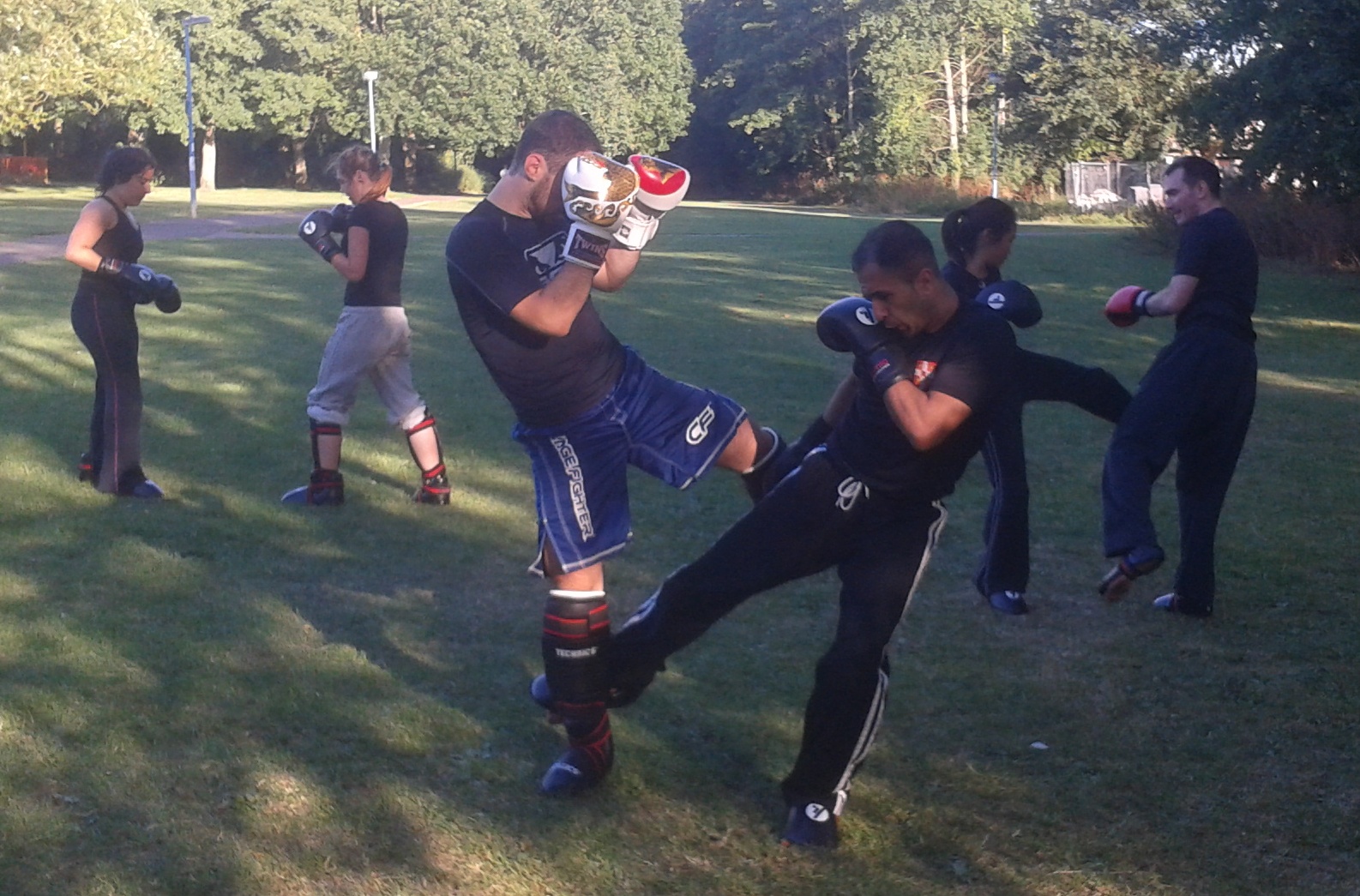
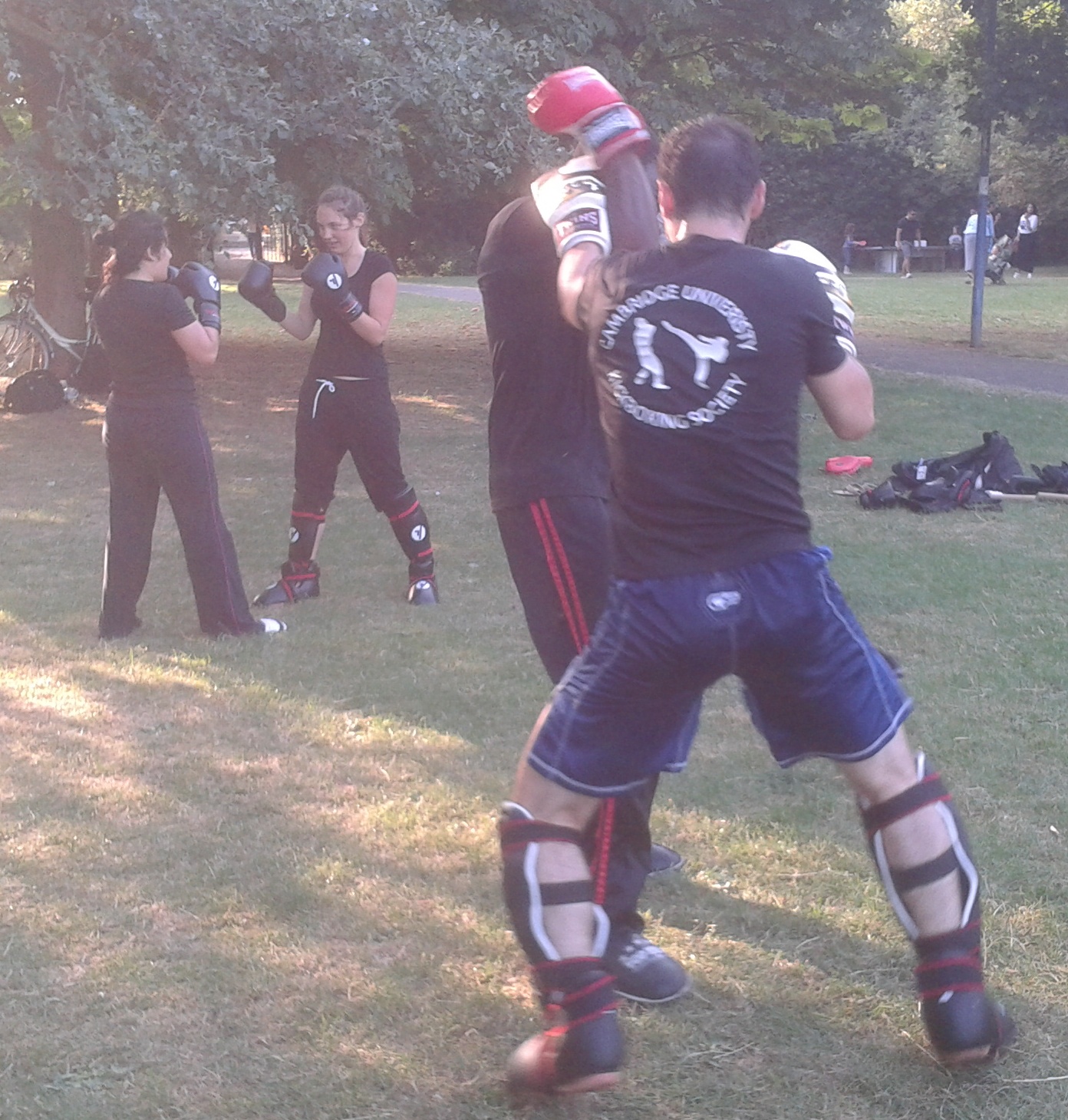
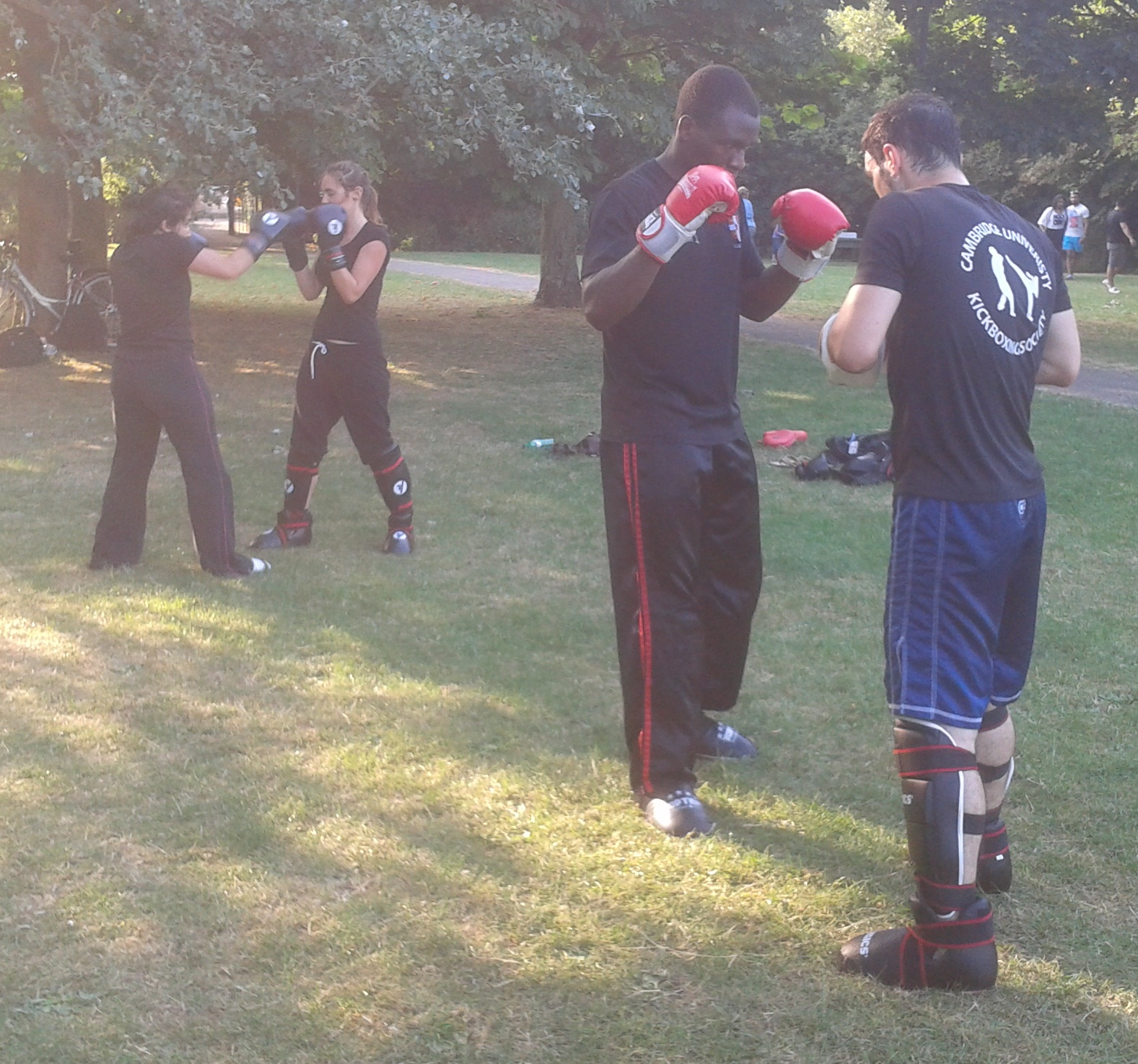
2013-07-21 18.50.27When CARISMA started, back in 1999, we were very often training in the beautiful parks of Cambridge, mostly Jesus Green.  That kind of a tradition has been kept over the years and we sometimes use parks when, for random reasons, some of our venues becomes unavailable and the weather is nice.  We also book all Sunday lessons for the summer (usually the whole July and August) to be run outside in one of the parks and, just if the weather is not good, we book at the last minute an available room for the day.

This year we have been lucky: so far all of the (5) Sundays we managed to train outside, enjoying the lovely weather and the sun.  If you have not tried yet please make sure you join us at one of our next Sunday lessons before end of August.  Here are a few pictures of the lessons we run:

Kickboxing for stress and exams

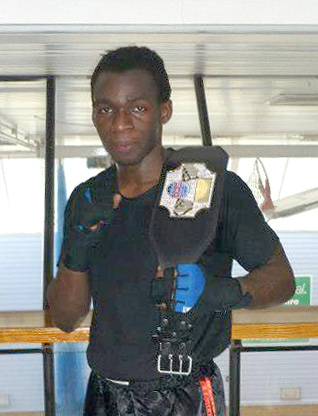
OllieOsunkunleOlaoluwakitan ‘Ollie’ Osunkunle (pictured here with his belt representing the national title he won in May 2013) is a CARISMA member who is leaving us this month after training very hard and regularly for 6 years.  Ollie joined us when he first started studying at the University of Cambridge for his medical degree which he achieved last month.  In 6 years with us he won several fights against various university teams as well in open regional and national competitions and he was awarded a 1st Dan black belt just a couple of weeks before his medical degree.  In his latest fight, weeks before his final exams, he won a national title.

One thing I often pointed out as a remark to his dedication was the consistency of his training regardless of the time of the year; he was one of the few university students that kept training during exam terms so I asked him to write a short article where he describes in his own words the experience of studying hard for a very demanding degree and, at the same time, train hard to be ready to fight at national level.  Here is his article:

            7 am. I fling myself bolt upright in bed. Letting out a great yawn, I do some simple stretches as I try to clear my mind for the day ahead. One day left. This is it. After six years of medical school; dissecting dead bodies; chemistry practicals and endless exams. This is it. My final exam before I hopefully earn the right to call myself doctor.

I sit at my desk and read through my list of tasks for the day ahead, there is only one decision left to make. “6.30pm → Kickboxing – sparring training”, can I make it? Of course, now let me explain why.

I studied medicine in Cambridge University. During my exam periods I kept my exercise routine as near to normal as possible. During the couple of months prior to my exams, I took part in the Oxford vs. Cambridge varsity match, won a national kickboxing competition and achieved my black belt in kickboxing. These achievements are by no means out of the ordinary and I know many other students that have kept up far more extensive sports participation.

I believe that there are a few key reasons why people give up on their exercise routines in the run-up to a major exam. Firstly, the threat of the impending exam causes the body to enter into a state of stress. In this state, people stop working to achieve their goals and instead struggle desperately to relieve themselves of their stress. Spending hours sat in front of study books is one such technique to relieve stress. However, those hours spent are often in excess of what is productive. A change is as good as a rest.

Secondly, with a prepared study plan and objectives to achieve before the exam, one might believe that there is simply not enough time to study and exercise in the same day. The disease of “time excusitis”. However, for most people, this is simply not the case. Working more efficiently: smarter rather than harder allows ample time for exercise in one’s day. Application of key principles such as Pareto’s law, commonly known as the 80/20 rule allows one to reduce the amount of material to learn. After all, 80% of the key information to learn will be covered in 20% of the available materials. Combined with Parkinson’s law, known as the law of forced efficiency, reducing the amount of time you have available to study forces you to focus on only the most relevant and high-yield data. Taking time out to kickbox helps you study smarter.

Thirdly, there is the worry of the biological effects that kickboxing may have on your body. After all, you may worry: “won’t I be too tired to study if I spend all my energy exercising?” Fortunately, the reverse is usually true. Exercise acts as a great stress reliever. Whilst a small amount of stress improves performance, large amounts have been shown to be detrimental to performance (1). In addition, exercise has been shown to improve memory, a great benefit prior to exams! (2)

So the next time you’re contemplating spending an extra hour in front of the books or heading to class, pick up your gloves and remember that there’s really only one correct choice to make. Punch away.

1.    L P. Emotionality and the Yerkes-Dodson Law. J Exp Psychol. 1957;54(5):345–52.

2.    Stroth S, Hille K, Spitzer M, Reinhardt R. Aerobic endurance exercise benefits memory and affect in young adults. Neuropsychol Rehabil. 2009;19(2):223–43.