10 good reasons to train martial arts

I wrote some time ago on my personal blog, Martial What?, a post that lists 10 reasons to train martial arts as a good alternative to other sports and physical actitivies: I thought it would be a goood idea to share it with you, CARISMA members.

Please read 10 reasons why martial arts are an effective alternative to gym, aerobics and lifting weights and let me know what you think by leaving a comment.

17 good reasons to be at Summer Camp 2009

SummerCamp2009

Copyright and courtesy of Duncan Grisby 2008

Toward the end of the first training session of the Summer Camp 2009 we started chatting during cooling down and we came out with this random list of good reasons to be here:

  1. Fun
  2. Training outside
  3. More time for cosial interaction
  4. Palinka
  5. Know other members better
  6. Training outside
  7. Swimming
  8. Better weather
  9. Goulash
  10. Training away from everyday’s distractions
  11. Holiday with a bit of training
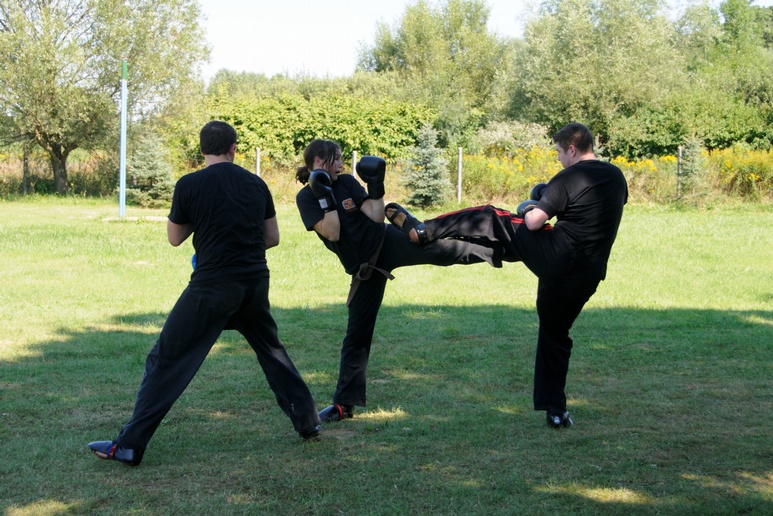
  12. Kickboxing
  13. Socializing
  14. Lots of clever people to have interesting, sometimes geeky, conversations
  15. Thermal SPA
  16. Better bonding on a personal level with some members of the club
  17. Alternative training sessions

Best wishes to those that are back in Cambridge from the Summer Camp 2009 group: Mark, Adam, Heley, Georgios, Linda, Ronnit, Wez, Chris W., Andrea and Massimo.

My thoughts about MAF-UK 2009

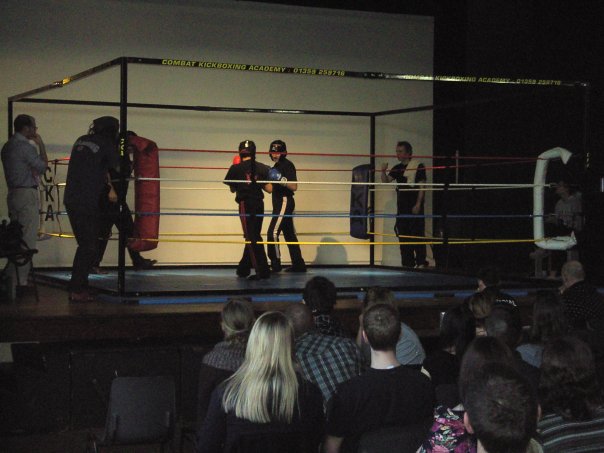
banner-maf-ukI recently coordinated and performed in three demonstrations at the Martial Arts Festival UK organized in Leicester by Kwoklyn Wan, a well known martial artist and Jeet Kune Do instructor who runs a number of schools based in and around the same town.

Choreographing a demonstration always requires some level of preparation while I personally prefer avoiding a complete rehearsal of the whole thing.  Punching, kicking and blocking, attacking and defending is something we do in every lesson so my basic strategy is always to have a script about what will be done but leaving the interpretation to the individuals in order to ensure the performance to be more realistic.  Ultimately a fight cannot be rehearsed.

I believe that the main objectives of a demonstration are:

  • To give a basic idea of  the main techniques in terms of kicks, punches, stances and guards for your particular school or style;
  • To be interesting for the person from the general public that doesn’t have even a basic idea about martial arts as well as gaining respect from fellow martial artists;
  • To show the level of skill of your school or club;
  • To be catchy enough to inspire passers by to stop and watch.

Given the final results and the video we managed to produce I am very happy of the overall experience: all CARISMA members that were there truly enjoyed it themselves.

A point I always try to make in my demonstrations is that we must remember that martial arts are about fighting, personal development, controlled actions and well harmonised attacks and defence.  Movements should look smoothly and effortlessly performed, otherwise we risk to be looking too much like street fighters.  On the other hand the demonstration should be and look realistic: for my taste a bit too many schools were running shows that appeared too much like dancing rather that expressions of fighting arts.

I was highly impressed by the organization of the show itself and I congratulated several times with Kwoklyn about location, quality of staff and their competence, the great variety of martial arts being showed and the workshops run.  I firmly hope I will be invited again to be part of the second edition of MAF-UK next year.

If you just want to sweat go for a run

Some times at the end of those intensive lesson when everybody is pushed to the limit some of my students come to me and congratulate or thank me for how good the lesson was.  Curiously this happens more often when I happen to run a “low tech” lesson with simple and immediate techniques that simply require intense and fast workout.

Kickboxing can be a hard and sweaty job: repeating many times sequences of punches and kicks at a fast pace can surely be a physically demanding task.  At the same time those who feel that a good lesson should be just the one that makes you sweat profusely I suggest to go for a run, do a round of circuit training.

My main goal as a coach is surely to prepare students in most aspects of performing martial arts, including teaching and improving techniques, combinations, balance, foot work, guard, strikes, defence and so on.  When sparring there are also aspects like release tension and being relaxed while having another person in front that is there to punch and kick you.  In certain cases an individual gets stuck in a situation where a certain kick or punch doesn’t work or it is not as efficient as it could be.  These are the times when the expert teacher or coach can really help to  get things working.

To some extent when I enter more complicated areas of training, explain or practice a difficult set of combinations it seems that a smaller number of students find it useful: is it perhaps because the others don’t really grasp the full essence of the lesson?