A dozen reasons for training at CARISMA

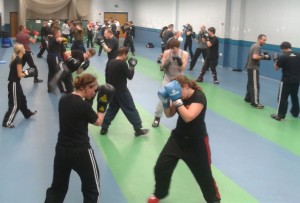
rp_busyclass-300x203.jpgCARISMA has been around for over 16 years and over this long time we have been training thousands of people from all walks of life, both male and females aged from early teens to mid-sixties.  Many of the people who moved on, for one reason or another, keep writing back about how much they miss CARISMA and how unique this Cambridge based club is.  I thought it’s a good idea to list, for those of you who don’t know us yet, why you should join us at your first chance:

  1. Wealth of knowledge and experience: CARISMA is run by 7 instructors between head coach, instructors and assistant instructors. Most of them have been with the club 10 years or longer and they currently have combined martial arts experience of 100+ years.
  2. Four classes per week included in your monthly fee allow great flexibility for training very busy people as most of our members are.
  3. Calculated on 4 sessions per week our fees cost you between £1.61 and £2.19 per session.
  4. We specialise in American kickboxing as well as we understand, know and teach basic concepts or other martial arts and self-defence.
  5. Beginners are taught, nurtured and taken care of, allowing them to learn in a very safe environment.
  6. While we are constantly encouraging people to push their training beyond their comfort zone we do respect and accept that not everybody wants to be a fighter.
  7. The considerable number of advanced people we have in house is enough to match the more experienced new comers who are looking for a real challenge in their training.
  8. Our equal opportunity policy is encouraging the less skilled ones while rewarding the talented and committed.
  9. Members of CARISMA belong to a great variety of age range, weights, body sizes, experiences, nationalities and genders: you are likely to meet several people who match your style and preference of training.
  10. Apart from training many local residents who work in Cambridge we are the official coaching body for both the university of Cambridge kickboxing society (CUKBS) and Anglia Ruskin university kickboxing club (ARUKBC).
  11. We are a non-profit organisation so our fees keep the club running rather than paying salaries.
  12. CARISMA is a fun bunch and there are frequent informal events like drinks after training as well as regular social events like summer BBQ and Xmas dinner.

Just to conclude: CARISMA is the place for you to train in Cambridge.  Whether you are a beginner interested in learning the basics or an advanced looking for your next fighting challenge you should join us and you will find a stimulating environment to foster your passion.
 

Slow start after long breaks

With 15+ years of history CARISMA has trained thousands of people which joined us, trained with us for some time and then, for various reasons, left us. It happens once in a while that somebody who left months or years before decides to come back which is always appreciated from our side.

I decided to write this post about prescribing a slow start for people who rejoin a martial arts club in general, CARISMA specifically. It was inspired by four former members of our club that during the last year have decided to re-join us and, not following my suggestions, gave up within a few weeks. The idea of slow start after long breaks is something that everybody should apply, whether you have been on a long holiday, took a sabbatical or moved temporarily away from training.

Let’s start from the beginning of someone’s training history, which might be similar to yours; you were feeling unfit or looking for a new challenge and decided to join our club. At CARISMA we welcome beginners from all walks of life, within a very broad range of ages and backgrounds. The majority of people joining us are not as fit as they would like; most of them are not as fit as they should be in order to perform at our average level of expected speed, power and accuracy. Upon joining most people experience a more or less steady progress toward fitness and proficiency which may be eventually reaching a peak or a plateau within a few years.

At that point you feel nicely fit, able to perform most exercises without struggling too much; if you are never struggling you are not pushing hard enough. Some training might be more challenging on power, others on endurance; others might push your skills to their limit. I hope it sounds familiar because that’s the way our training regime is designed to deliver. A continuous challenge that explorers all aspects of training martial arts, with the aim of creating a well round martial artist.

Imagine now that for some reason you stop training martial arts; if you are reasonably active person you might keep running, swimming, cycling or going to the gym. Your physical and cardiovascular fitness perhaps doesn’t drop that much and you still feel you can go back and pick up your martial arts training where you left it; here is where disappointment starts, for three main reasons:

  • Your mind still remembers pretty well most moves as they should be performed. Your muscles might have lost some reactivity or that level of flexibility which allowed you to block a fast attack, punch somebody and surprise them or kick to someone’s head.
  • Some of the people you still know at the club have progressed a great deal; some of them were just beginners when you left a year or so ago and now they are fit, fast and wining fights. You were used to nearly play with them, now they do the same with you and that’s very frustrating.
  • The two above reasons cause you to get hit more than you were used to and when you get hit it hurts more than you remember. That escalates de-motivation and often causes people to leave within weeks.

The simple solution to the problems described above is to manage your expectations and adopt the “slow start after long breaks” approach that is far from super scientific but it helps to avoid the above described situations.

Never mind you were an intermediate or a black belt: accept it will take some time to get back into shape by following these rules:

  • Give yourself 4-8 weeks; during that period you will accept your performance will be suboptimal
  • Approach each exercise at 50%-70% expected performance; don’t even try to achieve full 100% so you won’t be disappointed by the fact that you cannot
  • If you are training with partners try to find people which are either less experienced than you, lighter than you or both; training with them will not push you beyond a threshold that will show your reduced performance

Depending on your specific genetics you might catch up in a shorter time or perhaps a bit longer but managing your expectations and be realistic with your achievements will help you to get back in shape and keep enjoying your training.

A dignified approach to sparring beginners

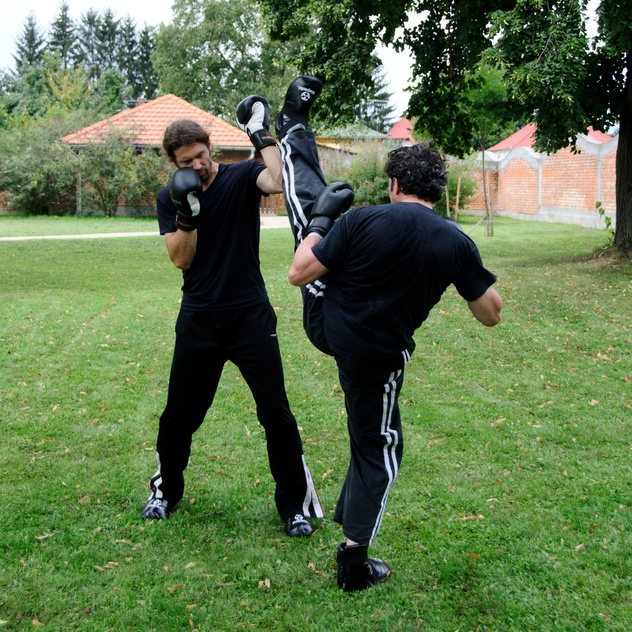
Image Copyright and courtesy of Duncan Grisby

Image Copyright and courtesy of Duncan Grisby

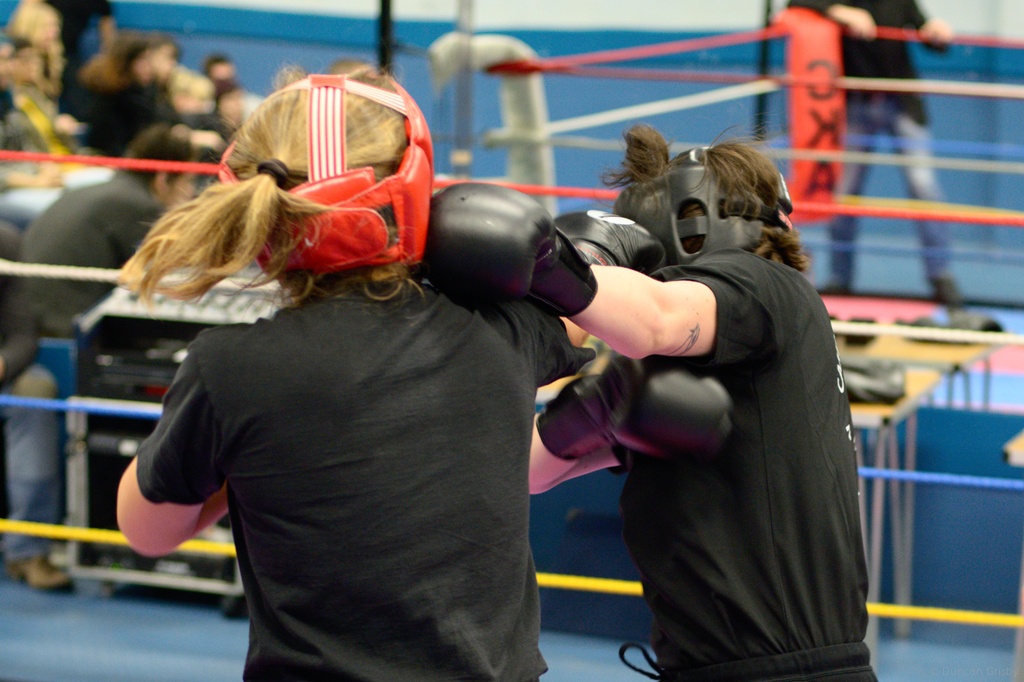
A couple of weeks ago I was having a chat with a friend who started white collar boxing in a local Cambridge club late last year.  He described his first day in that club in a way that many would depict as a horrifying experience. He was asked to enter the ring to spar with 5 established, fit and trained athletes from that gym, just to see “what he’s got”.  Result was, unsurprisingly, that he had a black eye and bruised nose.  In my opinion the above described event could indeed be a good approach to check who really has the guts to step into a ring without necessarily being prepared for that kind of confrontation; it’s also a great way of losing, by the dozens, potentially good students and future promising fighters, by discouraging them to continue training.

As a martial artist and a coach I find this kind of attitude very much old school and outdated; I like to teach, instil and apply what we could define as a dignified approach to sparring beginners, a methodology that encourages a novice student to starts her first steps into sparring without unnecessary risks of getting hurt.

Sparring is about putting in practice what technical lessons are teaching: techniques, combinations, foot work, attacking, defending and blocking; it all gets mixed together at fast pace and without precise order.  At first this is all very confusing and often overwhelming; for some people sparring triggers nearly irrational violent instincts while others simply freeze and get frustrated, feeling incapable of delivering decent performance.

We must assume that any decent martial arts club will have a bunch of senior students and members who are skilled in sparring and fit for fighting.  Some of them are perhaps competing at local, regional or national level.  These people have both the skill and the fitness to potentially hurt, seriously hurt, a beginner if just they wanted to.  However it makes very little sense to do that; I educate all of my students to avoid exploiting the advantage they have on beginners.

A dignified approach to sparring beginners is simply about setting your skills at a level that is slightly better than the beginner you are training with and showing her how you can score on them starting from a fairly soft level of contact.  Pressure of contact can and should be increased as and when applicable.  This methodology ensures that the advanced student is winning the round and maintains its technical superiority while it offers a list of advantages to both people sparring:

  • Better control of the fight
  • Reduced risk of injuries from both sides
  • Fostering an increasing self confidence for the beginners that ultimately helps to improve her technique and sparring skills

In some cases the dignified approach to sparring beginners becomes difficult to maintain because:

  • The beginner is learning and progressing a lot faster than expected and her techniques from one session to the other improves to a much better point
  • The beginner builds up a false illusion that her sparring skills are now sufficient to put in difficulty the advance student
  • The beginner gets enraged and starts hitting without any control

In the above cases we usually approach the problem with a few words of advice; if the beginners still misbehaves out of logical control we suggest increasing the pressure until it is enough to win the round and educate her.

So if you are a beginner you can be assured that your first sparring sessions will not be traumatic and testing what “you have got” but be aware that there are usually many people in the club that can potentially harm you so respect for your opponent is always a must.

Enjoying the British weather so far

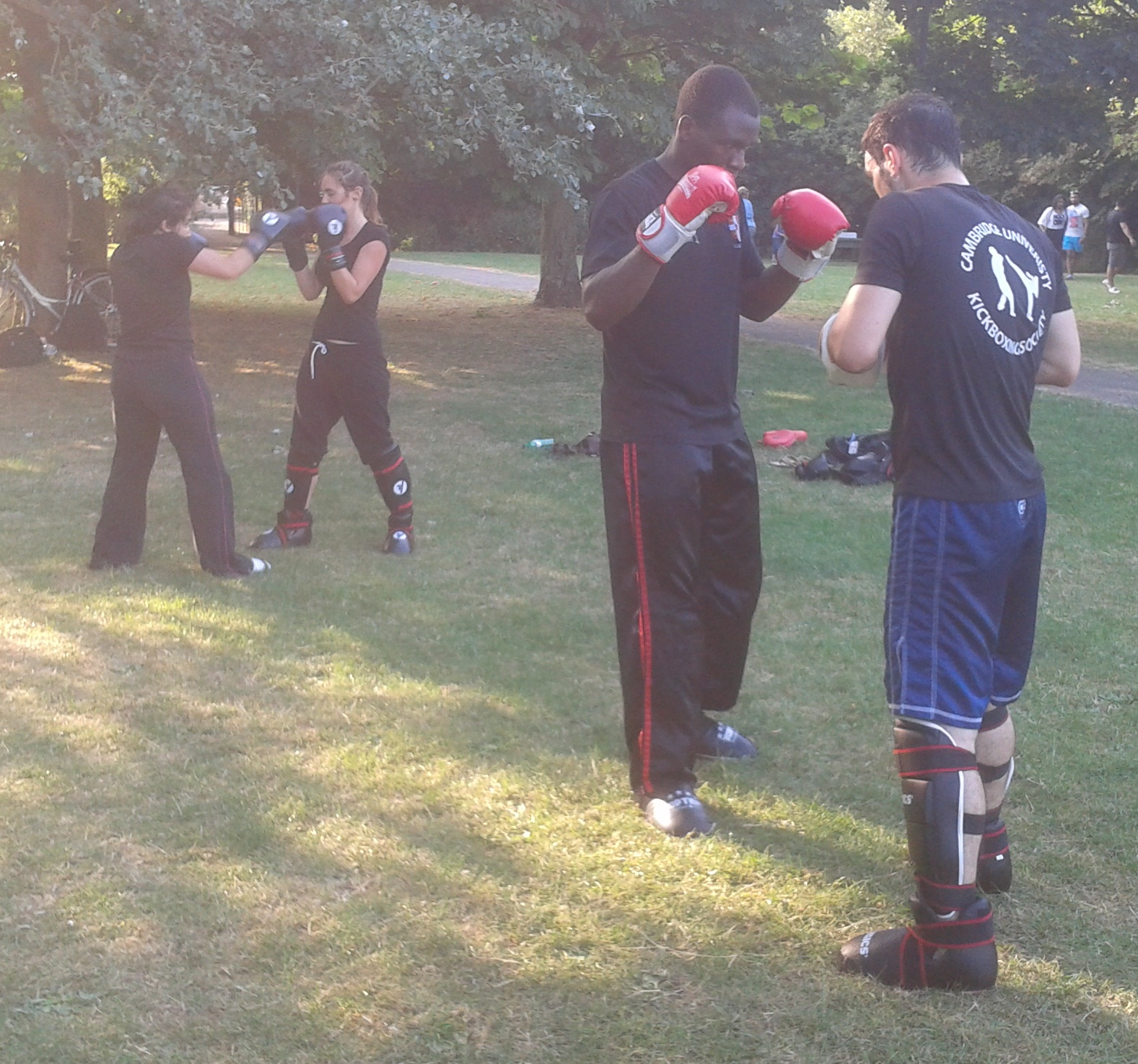
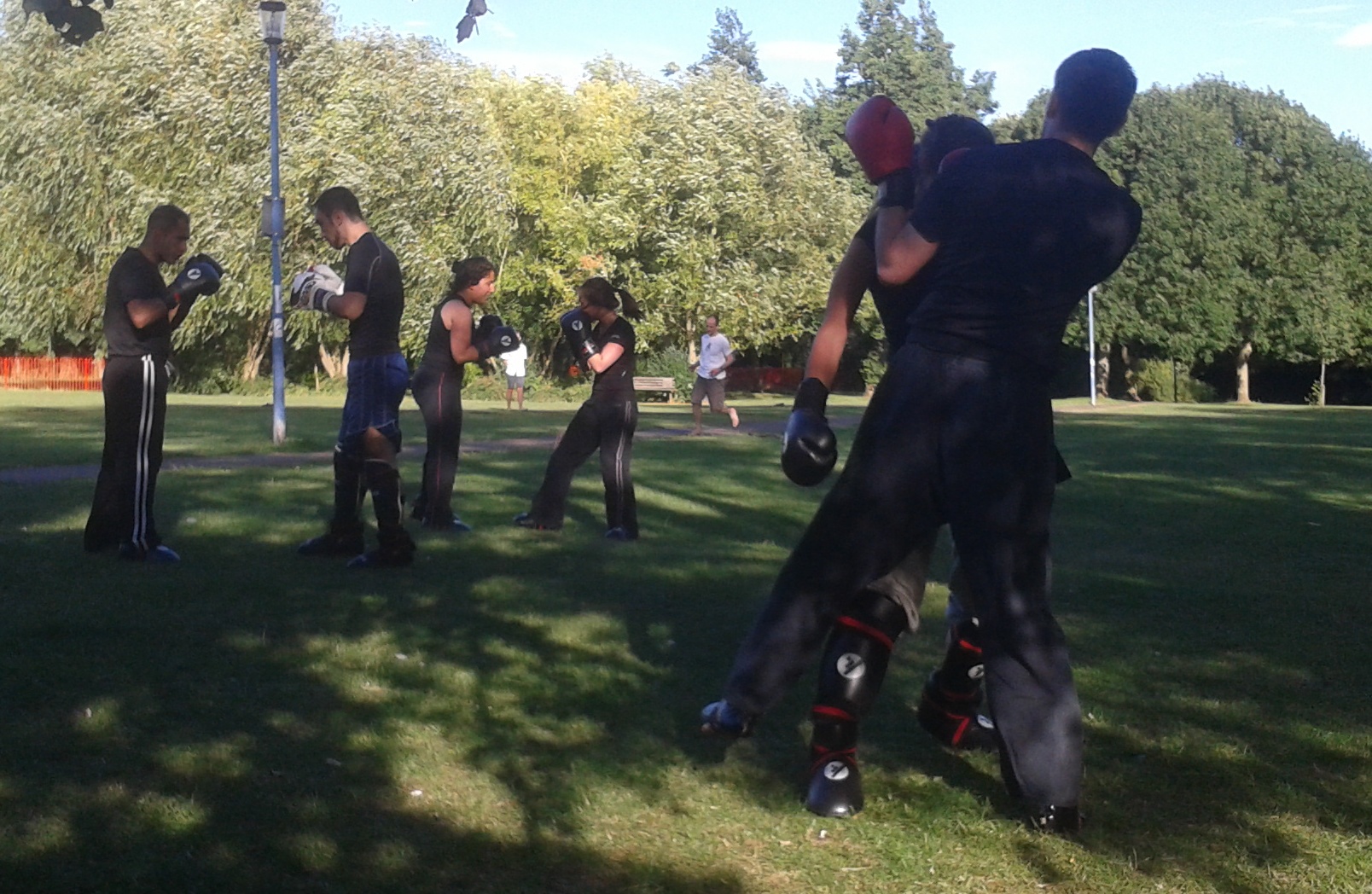
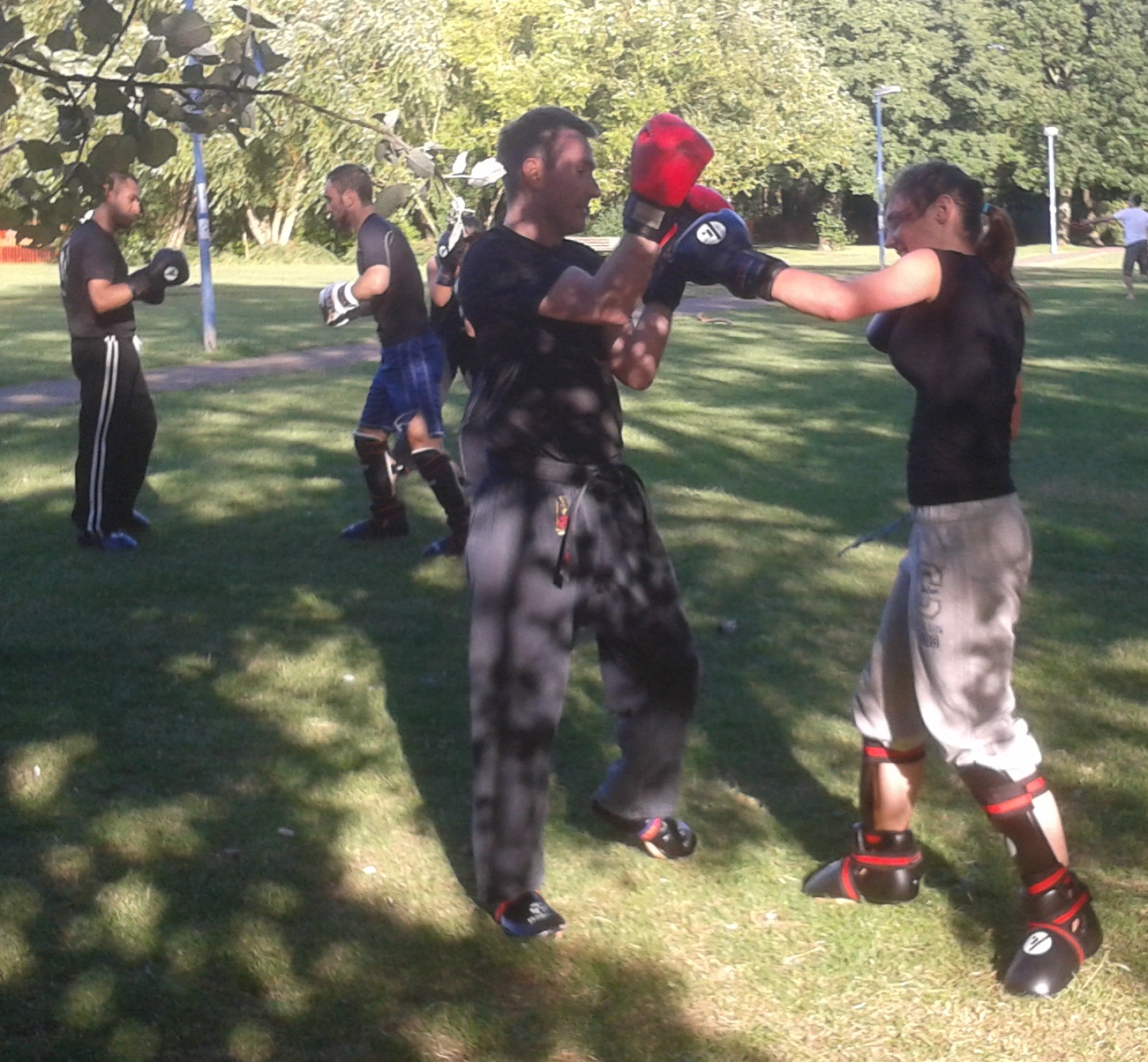
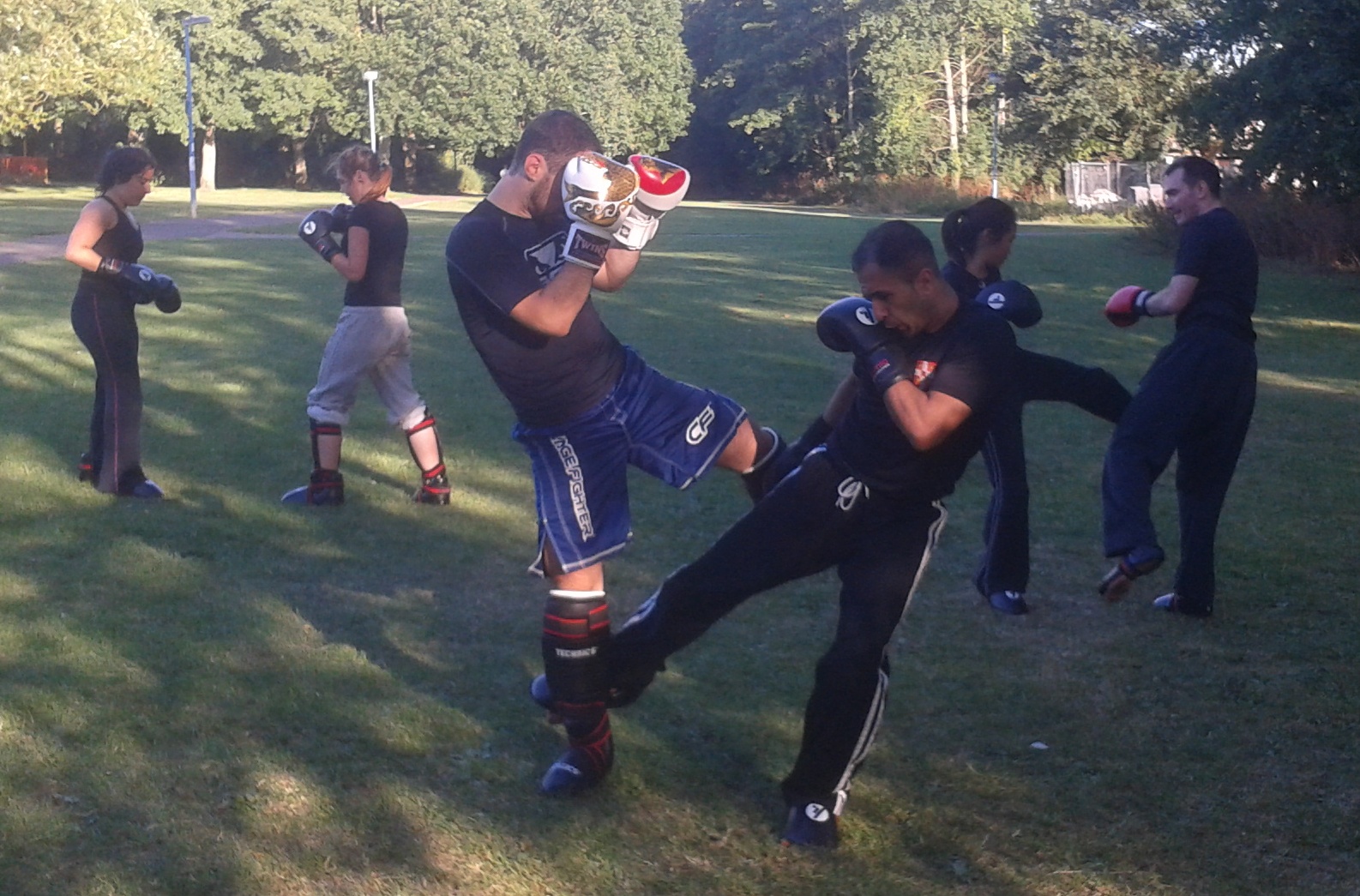
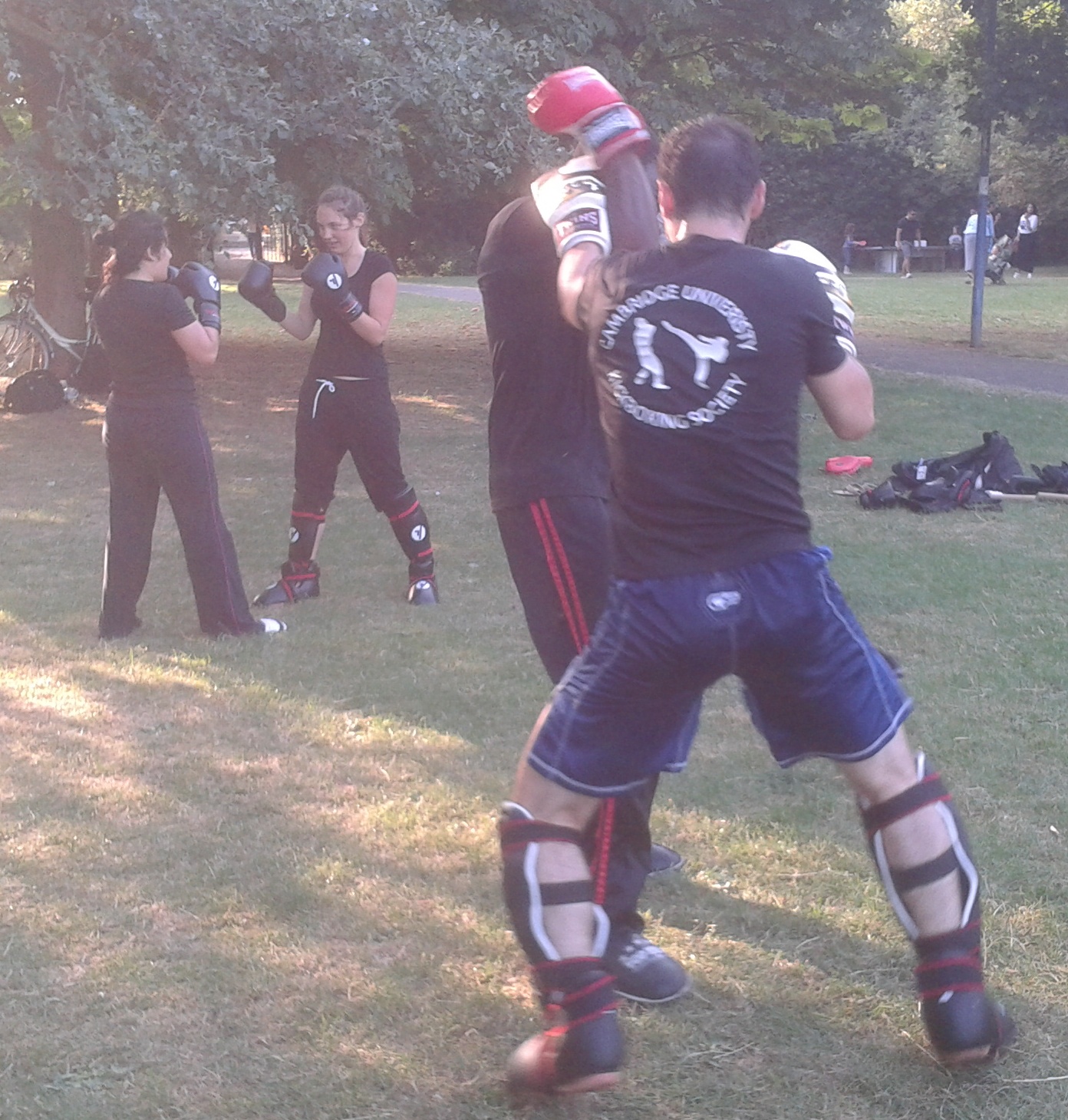
2013-07-21 18.50.27When CARISMA started, back in 1999, we were very often training in the beautiful parks of Cambridge, mostly Jesus Green.  That kind of a tradition has been kept over the years and we sometimes use parks when, for random reasons, some of our venues becomes unavailable and the weather is nice.  We also book all Sunday lessons for the summer (usually the whole July and August) to be run outside in one of the parks and, just if the weather is not good, we book at the last minute an available room for the day.

This year we have been lucky: so far all of the (5) Sundays we managed to train outside, enjoying the lovely weather and the sun.  If you have not tried yet please make sure you join us at one of our next Sunday lessons before end of August.  Here are a few pictures of the lessons we run:

Kickboxing for stress and exams

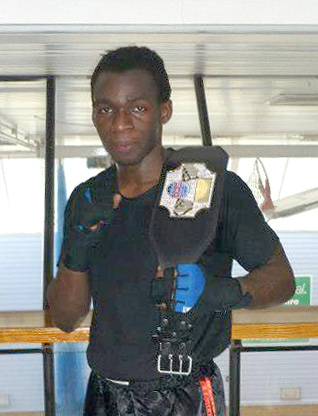
OllieOsunkunleOlaoluwakitan ‘Ollie’ Osunkunle (pictured here with his belt representing the national title he won in May 2013) is a CARISMA member who is leaving us this month after training very hard and regularly for 6 years.  Ollie joined us when he first started studying at the University of Cambridge for his medical degree which he achieved last month.  In 6 years with us he won several fights against various university teams as well in open regional and national competitions and he was awarded a 1st Dan black belt just a couple of weeks before his medical degree.  In his latest fight, weeks before his final exams, he won a national title.

One thing I often pointed out as a remark to his dedication was the consistency of his training regardless of the time of the year; he was one of the few university students that kept training during exam terms so I asked him to write a short article where he describes in his own words the experience of studying hard for a very demanding degree and, at the same time, train hard to be ready to fight at national level.  Here is his article:

            7 am. I fling myself bolt upright in bed. Letting out a great yawn, I do some simple stretches as I try to clear my mind for the day ahead. One day left. This is it. After six years of medical school; dissecting dead bodies; chemistry practicals and endless exams. This is it. My final exam before I hopefully earn the right to call myself doctor.

I sit at my desk and read through my list of tasks for the day ahead, there is only one decision left to make. “6.30pm → Kickboxing – sparring training”, can I make it? Of course, now let me explain why.

I studied medicine in Cambridge University. During my exam periods I kept my exercise routine as near to normal as possible. During the couple of months prior to my exams, I took part in the Oxford vs. Cambridge varsity match, won a national kickboxing competition and achieved my black belt in kickboxing. These achievements are by no means out of the ordinary and I know many other students that have kept up far more extensive sports participation.

I believe that there are a few key reasons why people give up on their exercise routines in the run-up to a major exam. Firstly, the threat of the impending exam causes the body to enter into a state of stress. In this state, people stop working to achieve their goals and instead struggle desperately to relieve themselves of their stress. Spending hours sat in front of study books is one such technique to relieve stress. However, those hours spent are often in excess of what is productive. A change is as good as a rest.

Secondly, with a prepared study plan and objectives to achieve before the exam, one might believe that there is simply not enough time to study and exercise in the same day. The disease of “time excusitis”. However, for most people, this is simply not the case. Working more efficiently: smarter rather than harder allows ample time for exercise in one’s day. Application of key principles such as Pareto’s law, commonly known as the 80/20 rule allows one to reduce the amount of material to learn. After all, 80% of the key information to learn will be covered in 20% of the available materials. Combined with Parkinson’s law, known as the law of forced efficiency, reducing the amount of time you have available to study forces you to focus on only the most relevant and high-yield data. Taking time out to kickbox helps you study smarter.

Thirdly, there is the worry of the biological effects that kickboxing may have on your body. After all, you may worry: “won’t I be too tired to study if I spend all my energy exercising?” Fortunately, the reverse is usually true. Exercise acts as a great stress reliever. Whilst a small amount of stress improves performance, large amounts have been shown to be detrimental to performance (1). In addition, exercise has been shown to improve memory, a great benefit prior to exams! (2)

So the next time you’re contemplating spending an extra hour in front of the books or heading to class, pick up your gloves and remember that there’s really only one correct choice to make. Punch away.

1.    L P. Emotionality and the Yerkes-Dodson Law. J Exp Psychol. 1957;54(5):345–52.

2.    Stroth S, Hille K, Spitzer M, Reinhardt R. Aerobic endurance exercise benefits memory and affect in young adults. Neuropsychol Rehabil. 2009;19(2):223–43.

My fourth Dan grading

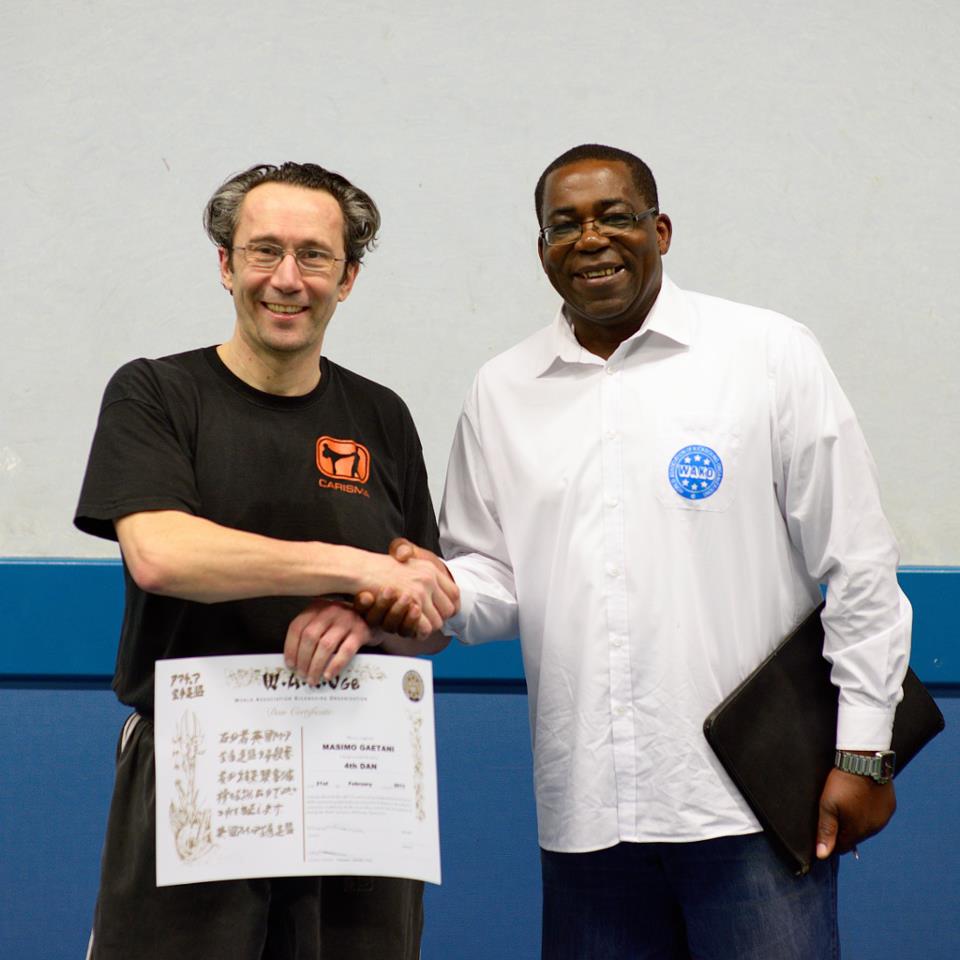
Massimo4thDanHaving started practicing kickboxing in 1981 I could say that my approach to grading has been quite relaxed. Last Thursday, 21st Feb 2013, I finally passed my fourth Dan grading, a rank that many people achieve in their late twenties or early thirties and within 15 or so years of experience in one martial art. To some extent I was never too rushed into the next rank: it surely is a good recognition of personal achievements but it doesn’t bring to the bearer any better martial skills. In my opinion a rank is just a title and a way of comparing your experience and achievements with others. At the beginning of my experience I initially managed to skip a couple of ranks and qualified 3 Kyu (3 ranks from first Dan) within two years but it was not until 6 years later when I got my black belt I 1989. In my experience of late while the first and second Dan grading are still very much based around one’s personal performance there is a substantial shift in expectations from the third Dan and above.

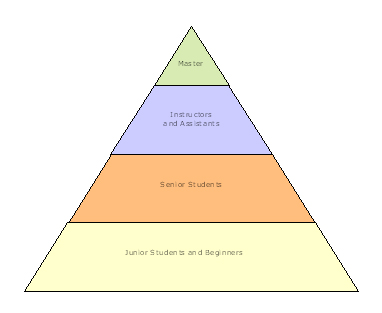
The examiner, represented by Neville Wray (pictured on the right) current vice president of Wako GB and one of the top ranked kickboxers in UK, wants to see you running a class, the quality of your teaching and consequently the quality of student’s style, knowledge of technique and individual preparation. To some extent it is quite natural to expect that a person ranked third rank or above would be running a club or at least a class so the quality of their technique, as well as their teaching abilities can be measured by how well their team performs. In my case I was very pleased of having a nice and varied class of 36 people ranging between beginners with just a few weeks experience all the way to 4 black belt and 5 instructors. I did run our usual warm up, then split the class in two groups; I run the advanced group while one of my instructors took care of the lowers grades and beginners. During the first 40 minutes of techniques we displayed some combinations that are typical of the CARISMA curriculum, like fast double kicks with one leg, various applications of the axe kick and various situations of attack and defence. I then switched group and demonstrated how I teach some of the most basic techniques and postures to beginners. The whole class behaved, very much like in most classes but with a bit of extra discipline, like a single organism with people pausing and listening when I was explaining new techniques and then immediately performing the various combinations on my command. Naville first congratulated with me privately mentioning how good the class he saw was. He then announced to the class the successful result pointing out the quality of teaching and techniques he saw, how well everybody behaved and the fact that on a scale of 1 to 10 he would rank the technical skills at 11 🙂

I am very pleased of having finally reached my fourth Dan; it was particularly interesting to see my pictures tagged on Facebook receiving many congratulation comments and a large number of Likes from friends located all over the world. I do not feel I am a much better martial artist then I was on Thurs morning… but it surely feels good 🙂 Now it’s time to start thinking fifth Dan.

Training kickboxing while maintaining low injury rate

    Image courtesy and copyright Duncan Grisby

Image courtesy and copyright Duncan Grisby

Martial arts are mostly designed and conceived as fighting systems. Fighting is about hurting other people so it is about delivering intense blows to another person; anybody training realistically risks hurting or getting hurt during sessions. Some styles like Judo were in fact conceived to reduce the risk of injuries by removing the most dangerous techniques from its ancestor: Ju Jitsu. Other styles limit the teaching and practicing of dangerous techniques to advanced students or simply avoid full contact training or sparring. Realistically speaking training with a certain level of contact and impact is necessary for anyone competing at full but also light contact level.

Training “full on” and maintaining a safe training environment creates a dilemma that troubles many martial arts clubs and some of them take one position in the spectrum of the impact vs. safety curve: some on the safe and sometimes unrealistic, particularly for those who want to use martial arts for self defence while others take it to an extreme and have a very high number of injuries some times serious ones. Kickboxing and many other styles that are practiced wearing pads offer the advantage of covering some of the “weapons” like fists and feet so that they ensure a safer training practice. In my experience of over 3 decades of training Kickboxing I definitely seen many incidents but, considering that we spend several hours per week kicking and punching each other, often at full power, the number of serious damages is negligible. In the over 13 years I have been running CARISMA, I can remember very few (3-4) broken noses, a few broken or cracked ribs (less then 10), a couple of swollen feet and very recently a broken foot. We obviously have the occasional, once per month or less, black eye and regular bruises, mostly on the arms when people receive attacks and block with their guard. All in all I am sure we are safer than most football or rugby club.

Some Kickboxing clubs spend most of their times hitting focusing mitts and Thai pads; that a great way of practicing power while minimising the risk of injuries. Personally I am a strong believer in one-2-one training combining attack and defence techniques and combinations that emulate the sparring environment. I find that pad work is mostly conditioning body and mind to simply face a passive opponent that invites you to hit a target. The pair training also helps improving defence reflexes together with blocking and parrying skills.

In my experience a proven formula to ensure a safe full contact training environment is to teach people to actively block the attacks they are subject to by using active blocks and parries rather than passively accepting blows on their guard. This last strategy is taught as the last resource that people should use when in extreme difficulty. When teaching blocks to beginners we always start from the technique with bare hands to show the exact mechanical movement involved and how to minimize the impact on one’s body while deflecting as much and possible the forces rather than absorbing them onto his/her own body. Then, when gloves are worn, they add extra safety to the whole situation and further minimise the risk of bruises and scratches. Many thousand repetitions later all movements become instinctive and automatic and they can work even at full speed and power. Sparring obviously increases the risk of incidents and injuries but, once more, if students have very clear ideas about precise blocking the whole process becomes as safe as it can be although never 100% incident free.

Training when injured

Alex training with a broken footThere is quite common saying, in traditional martial arts schools, when you hurt one of your hands or feet: “you have another hand and two feet, you can still fight!”
In today’s world of health & safety regulations and “better safe than sorry” attitude many people in position of responsibility, like doctors, instructors, teachers or lawyers tend to default toward a safe behaviour when unsure: stop training and rest until healed.

If I followed this rule I would have probably trained about a third of the total time I actually did.  When training martial arts (but also other contact sports) injuries do happen, however careful and safe you play.  Injuries sometimes occur even during simple drills or exercises, not necessarily during the toughest part of training such as sparring.

Pain exists to remind us that what we are doing is not right for our body and we should really listen to our body; training while ignoring pain could be dangerous and deteriorate the injured part with the risk of causing permanent damages.  At the same time there are safe ways of training when injured by using the body parts that don’t hurt so that you keep training them and avoid contact with the injured part.

An extreme case of this behaviour is Alex who recently broke a bone in hit foot by slipping while sparring; although with the foot in a hard cast he kept attending our classes doing stretching, press ups and abdominal exercises so to keep up with fitness and flexibility.  At some point as you can see in this video below he was even punching the bag while seated.

In over 30 years of training I was lucky enough to avoid any seriously broken bones (apart from a little toe a couple of years ago) but every time I bruised, mildly dislocated joints or strained muscles on one side of my body I kept training with the other side improving the total symmetry of my techniques.

The importance of proper alignment in front stance

I will define proper alignment, for the purpose of this post, as the correct alignment of limbs and other body parts so that all vectors of the forces involved in a particular movement or techniques are correctly aligned in order to produce the best performance. For simplicity we can call internal alignment the alignment of your own body and external alignmentwhen we refer to the alignment of your body compared to the position of your opponent. Bruce Lee used for the same purpose the definition of winner’s position in his “Tao of June Kune Do”. I will explain in this post the importance of proper internal and external alignment for maximum results, applied to the front stance.


For the majority of people training martial arts it should be pretty obvious the correct internal alignment when preparing for or performing a technique. When training traditional martial arts like Karate, Judo or Aikido a lot of emphasis is paid to the external alignment as well as the internal one. Wing Chun has even a form based on the wooden dummy where proper alignment of techniques can be trained and improved by the continuous feed back that the dummy actually offers.


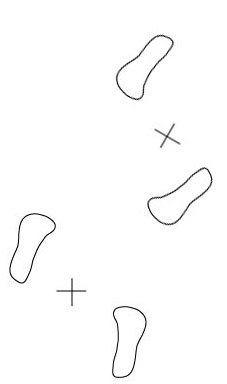
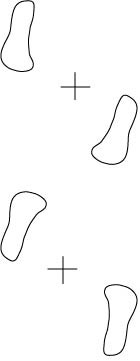
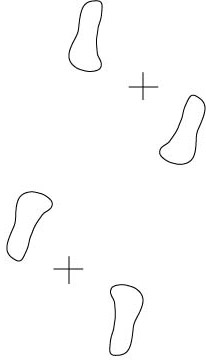
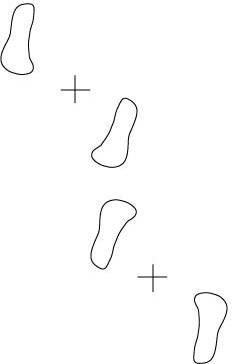
When training contact sports like kickboxing or boxing the application of proper internal alignment offers a good and stable position that is optimum for attacking and defending. The effectiveness of external alignment is easily measurable when testing the actual power that can be exercised onto a target. I prepared some simple pictures below that explain my thinking from a front stance that applies to boxing, kickboxing and many other fighting styles. In all of the pictures the shapes of the feet show the correct angle to be standing (with small personalised variations) and the cross indicates where the centre of gravity should be falling, aligned to the central line of the person.


Correct alignment

When two opponents are aligned as in this picture all punches will work correctly as well as all kicks with the rear leg (right, in this case). In this case the one person’s right foot is in line with the other person’s left foot and their central lines are in front of each other. We should remember that all straight strikes (jab, cross, front kick, side kick) should be aimed at the central line of the opponent (with small variations) while the round kick will go across in a circular motion that naturally tend to align the right foot to the line of the left on while hitting the opponent in the process.

Misaligned on the left

This is when the right feet of both opponents are nearly or completely aligned. When misaligned on the left you might have the illusion that straight strikes such as front and side kicks with the rear leg come easier but, in reality, your all structure is weaker and most punches will not work properly. The round kick with rear leg will have to travel a shorter distance to hit the target but it will end up weaker than when properly aligned.

Misaligned on the right

I find this to be the most common form of misalignment, particularly among beginners. Some people instead of trying mirroring the opponent’s position tend to align their left shoulders when facing an opponent. In this case the left feet of both opponents are nearly or completely aligned. All techniques coming from the rear part of the body will be very weak because they will never reach the optimum alignment of the body they have been designed for. Techniques with the front hand will also be weaker than when correctly aligned.

Misaligned at an angle

When one of the opponents stands at a funny angle the whole concept of alignment will cease to work and most techniques will simply have to be performed accepting reduced performance or by trying to realign with proper foot work.


All examples seen above could be obviously mirrored when people are standing with the right foot in front.

Conclusion

These examples of alignment and misalignments should be considered individually, taking into account the dynamic aspect of a fighting sport or a martial art. Positions of two opponents could be changing several times within a few seconds and it might be difficult to seize the right instant when everything is next to perfect. In my experience the most essential thing is to train the positions and the alignment statically as part of individual techniques or combinations and then check them during sparring to ensure that they work as expected.